Home / Our process

How your cartons are made

Our process

From the first design to the final delivery. Scroll through the photographs and see how each part of the process brings your carton to life.

The floor

A state-of-the-art facility in Pakistan.

Good printing needs modern machines, and ours are among the best: German-built Heidelberg Speedmaster presses, Swiss Bobst die-cutting and folder-gluing, and Amsky computer-to-plate imaging. Since 2016 that floor has grown into the only printing and packaging manufacturer in Khyber Pakhtunkhwa with a significant export presence, serving pharmaceutical companies at home and abroad.

1.5 million
boxes a day at full capacity
5 colours
plus a coater, in one pass on Heidelberg presses
100
skilled people on the floor
2016
incorporated in Pakistan

Our process

Pre press

Every carton begins as an idea on a screen. Before a single sheet is printed, the artwork is designed, engineered, colour-matched and approved, then carried onto a printing plate in our own pre-press room.

On the floor

  • Art and design in-house: our designers create artwork, revise existing designs and engineer the carton structure up to the first proof.
  • Colour is managed against Pantone formula guides, with every shade matched by a specialised colour team before anything goes to plate.
  • Amsky computer-to-plate: the approved artwork is imaged straight onto the aluminium plate at 2,400 dpi, with no film in between, so every colour registers precisely on press.
  • Plates are processed, checked and stored in-house, and board is cut to the exact sheet size before it reaches the feeder.

In the pre-press room

  • Artwork creation and carton design
  • Revisions and enhancements to existing designs
  • Product engineering and dielines up to the first proof
  • Colour management with Pantone formula guides
  • Amsky computer-to-plate imaging and plate processing
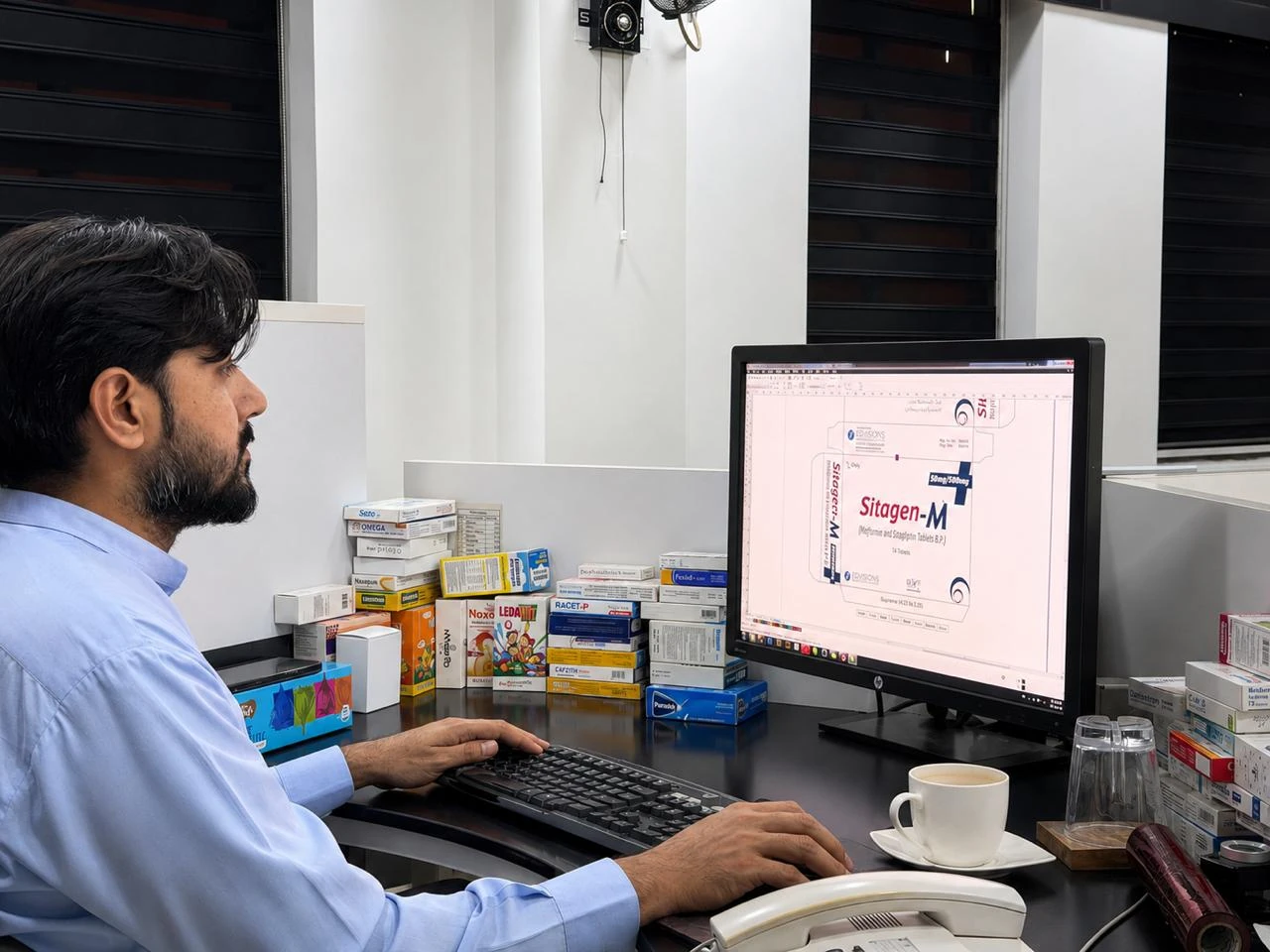
From the first idea to the approved artwork.

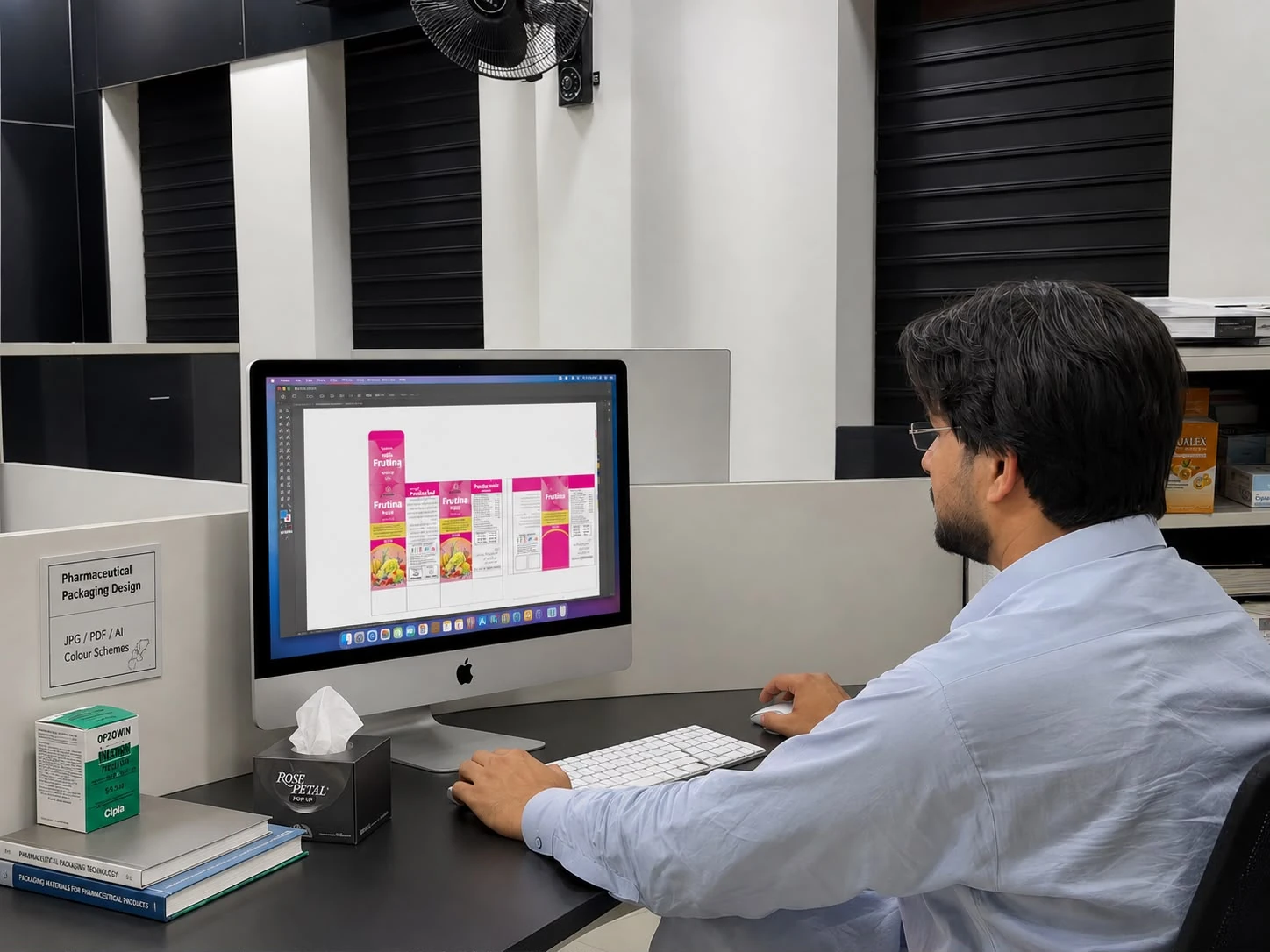
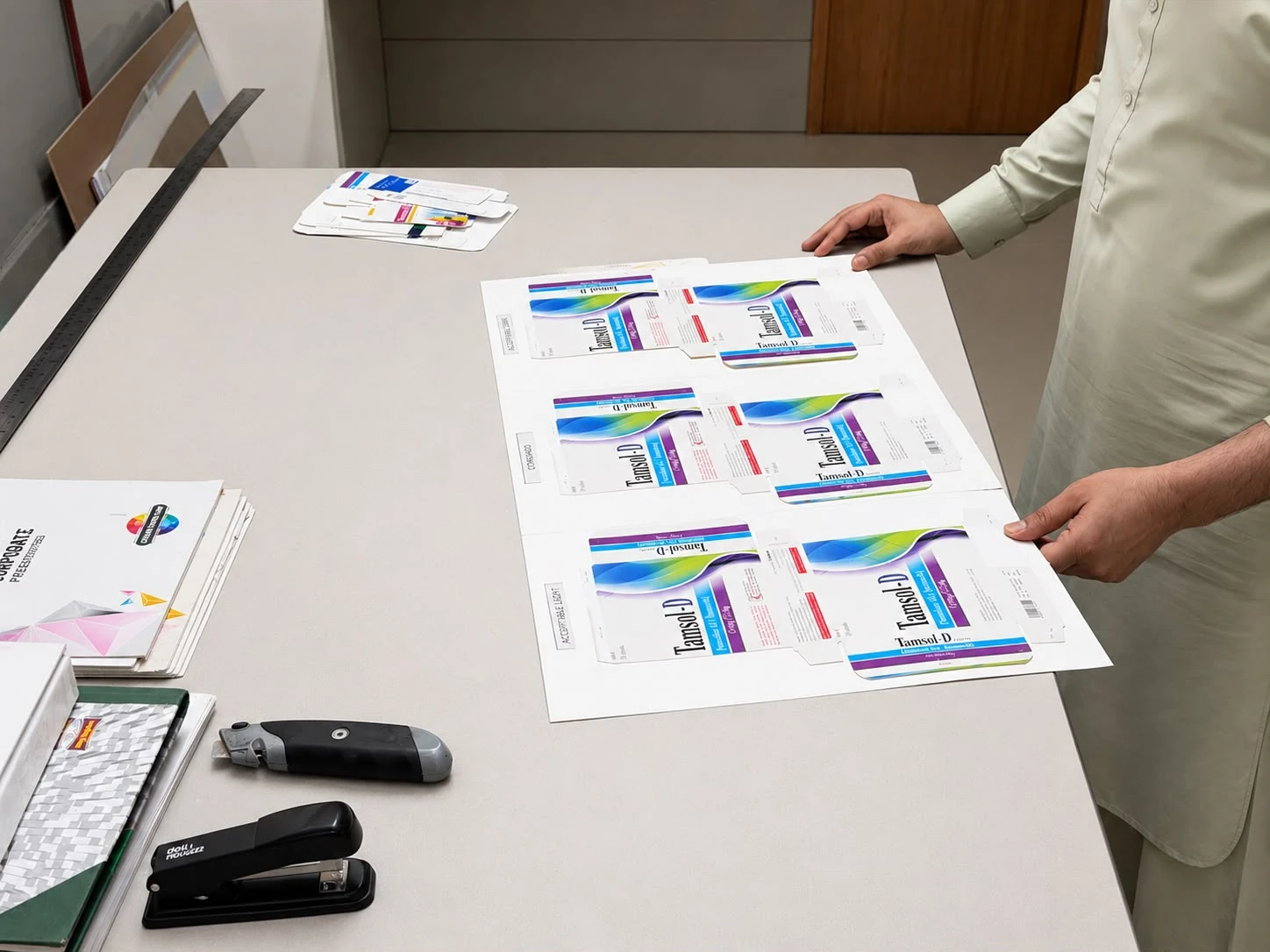
Our designers prepare the carton layout, arranging its panels, text and colours on screen. Printed artwork is then reviewed alongside the samples, so every detail is checked before plate preparation.

Designer preparing carton artwork on a computer.
Preparing the carton layout
Designer working on packaging artwork at an iMac.
Refining the artwork
Printed carton layouts being reviewed on a worktable.
Checking the printed layout

Artwork becomes a printing plate.

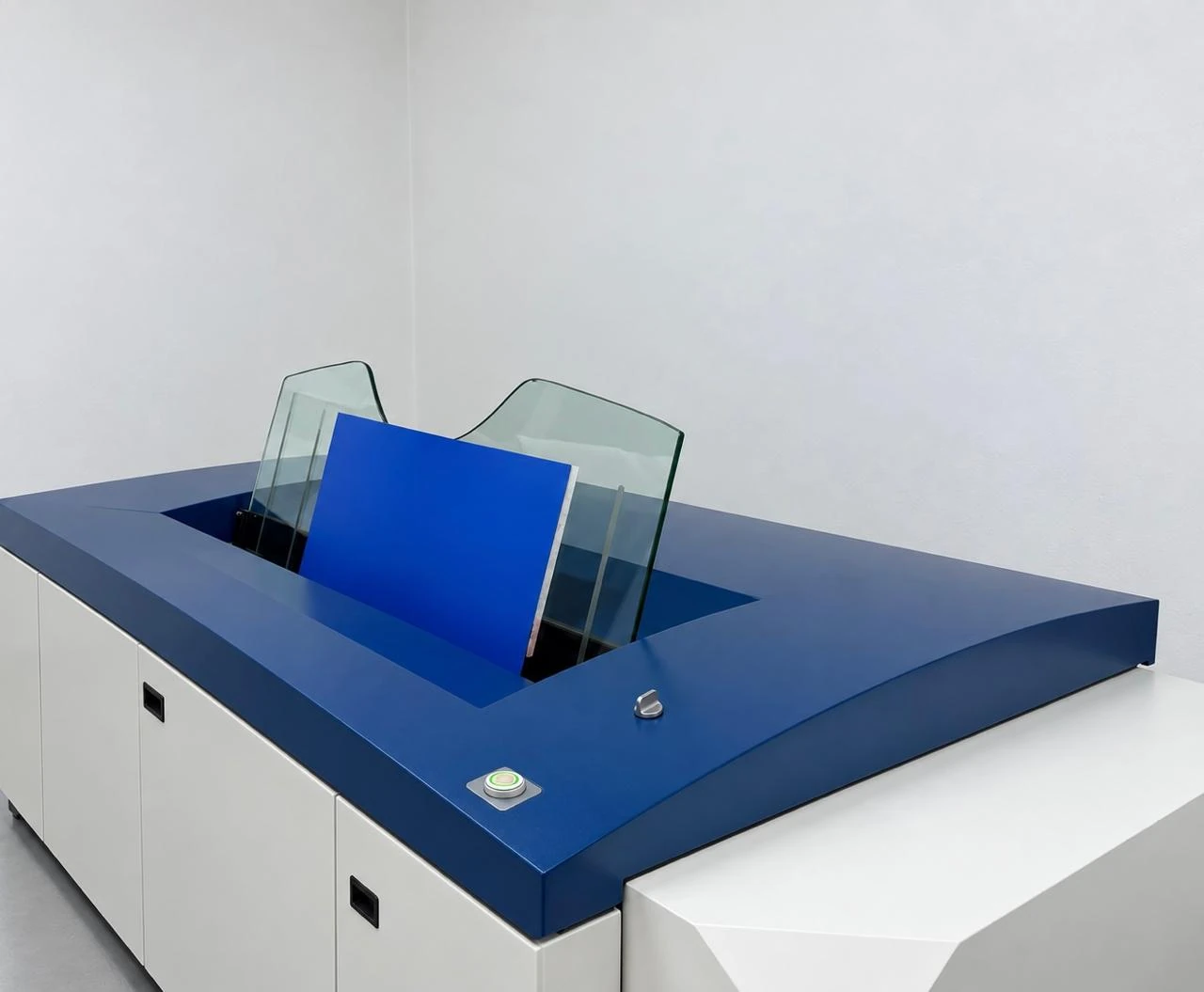
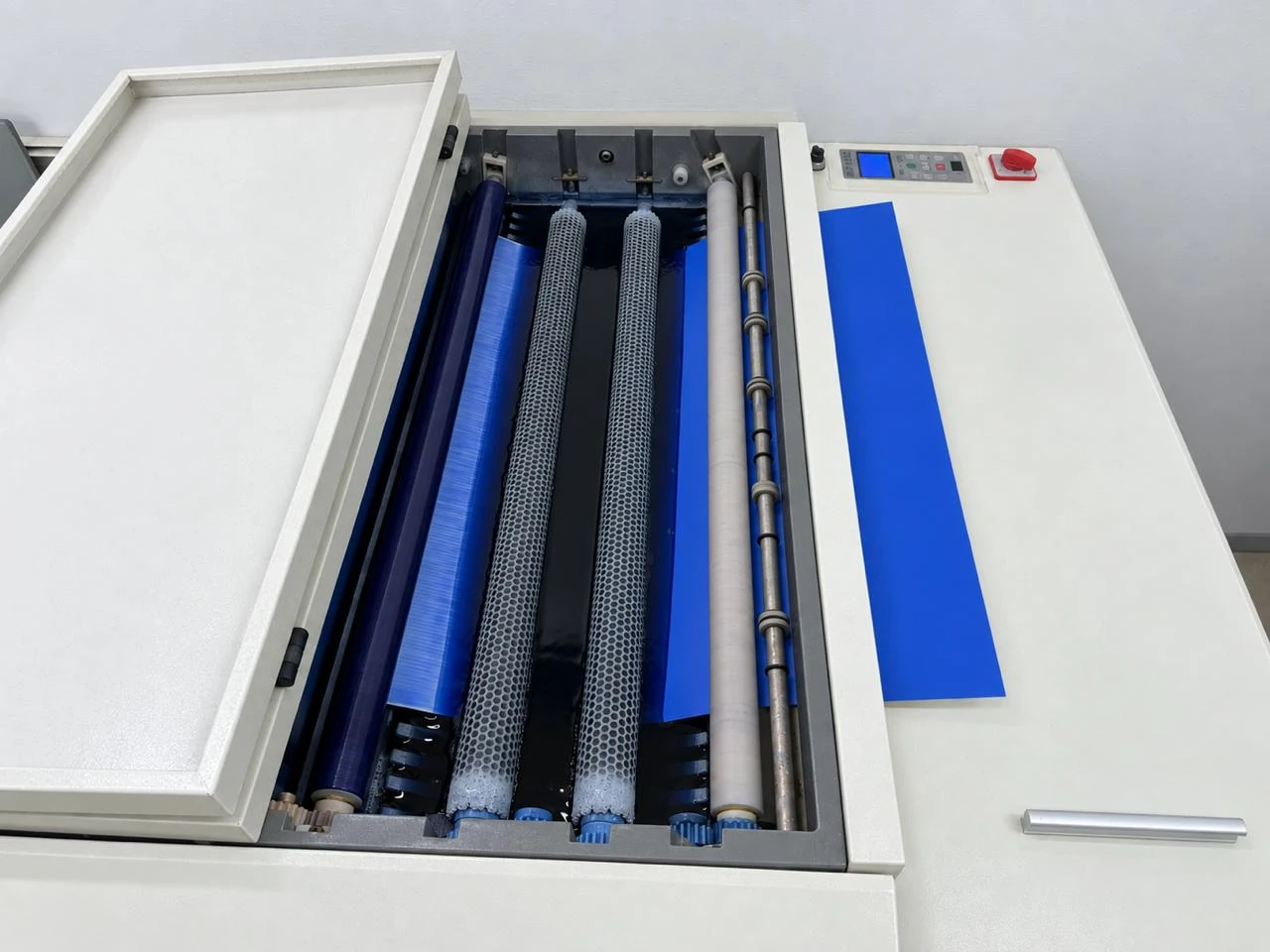
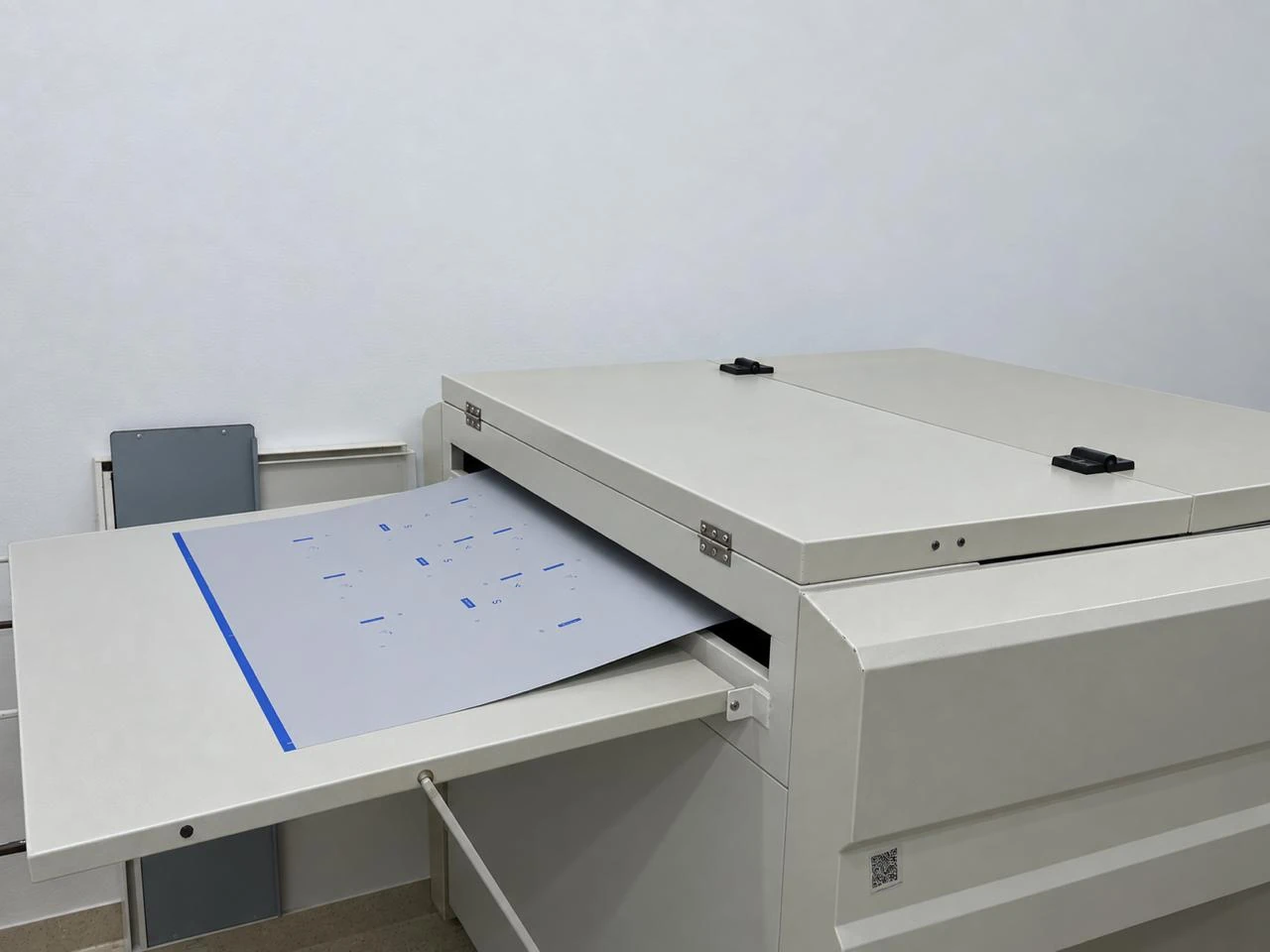
The approved artwork is transferred to a blue-coated aluminium plate on our computer-to-plate (CTP) system. The plate then passes through the processor, which cleans away the coating and reveals the image areas.

Blue printing plate loaded into CTP equipment.
CTP plate preparation
Printing plate passing through processor rollers.
Processing and cleaning

Checked, stored and ready.

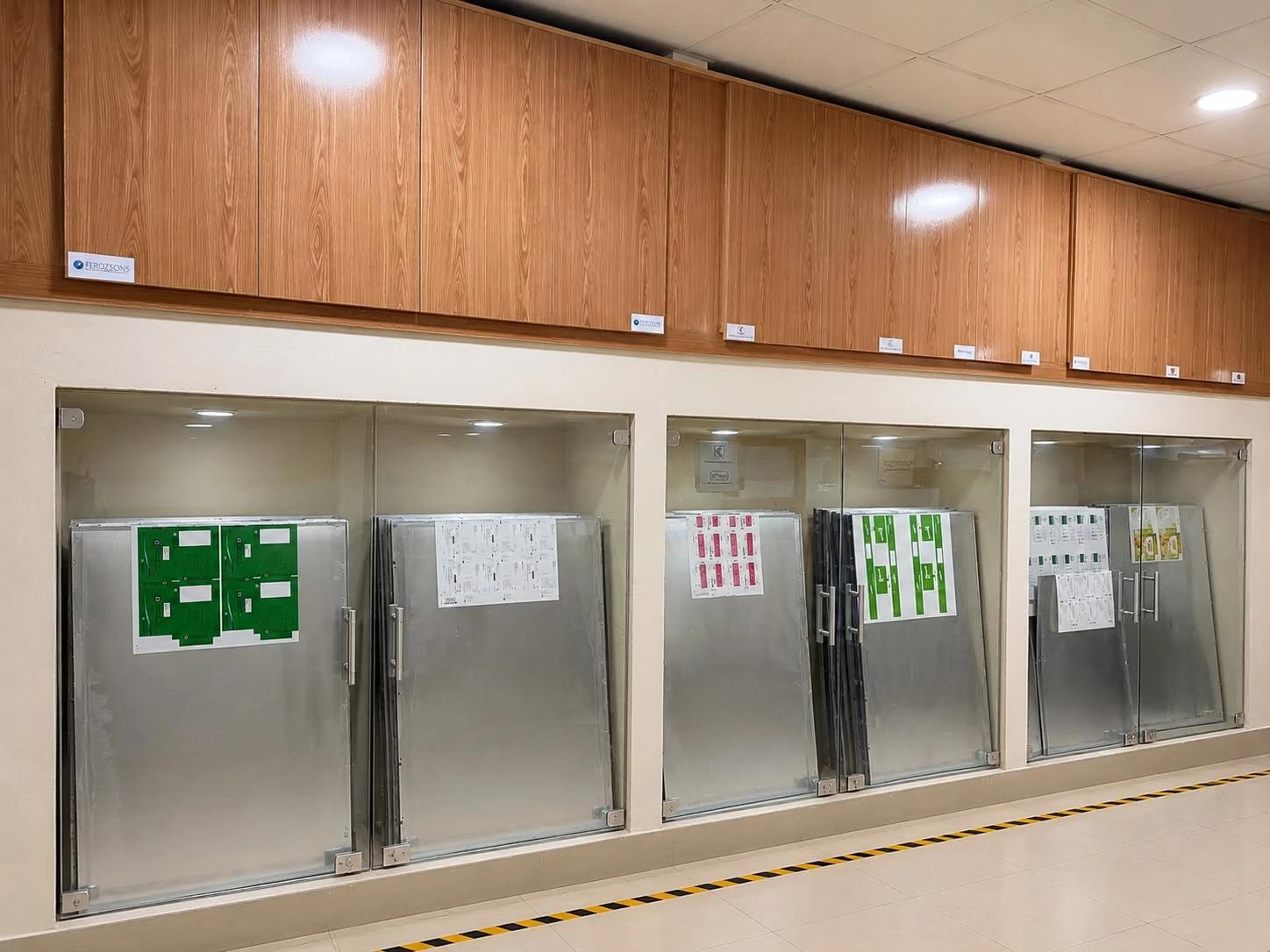
Each processed plate is checked for a clear, complete image, then kept in labelled storage so the right plate is ready for the right job.

Processed printing plate with visible image areas.
The prepared plate
Printing plates stored in labelled glass-fronted cabinets.
Organised plate storage

The right sheets, ready for the press.

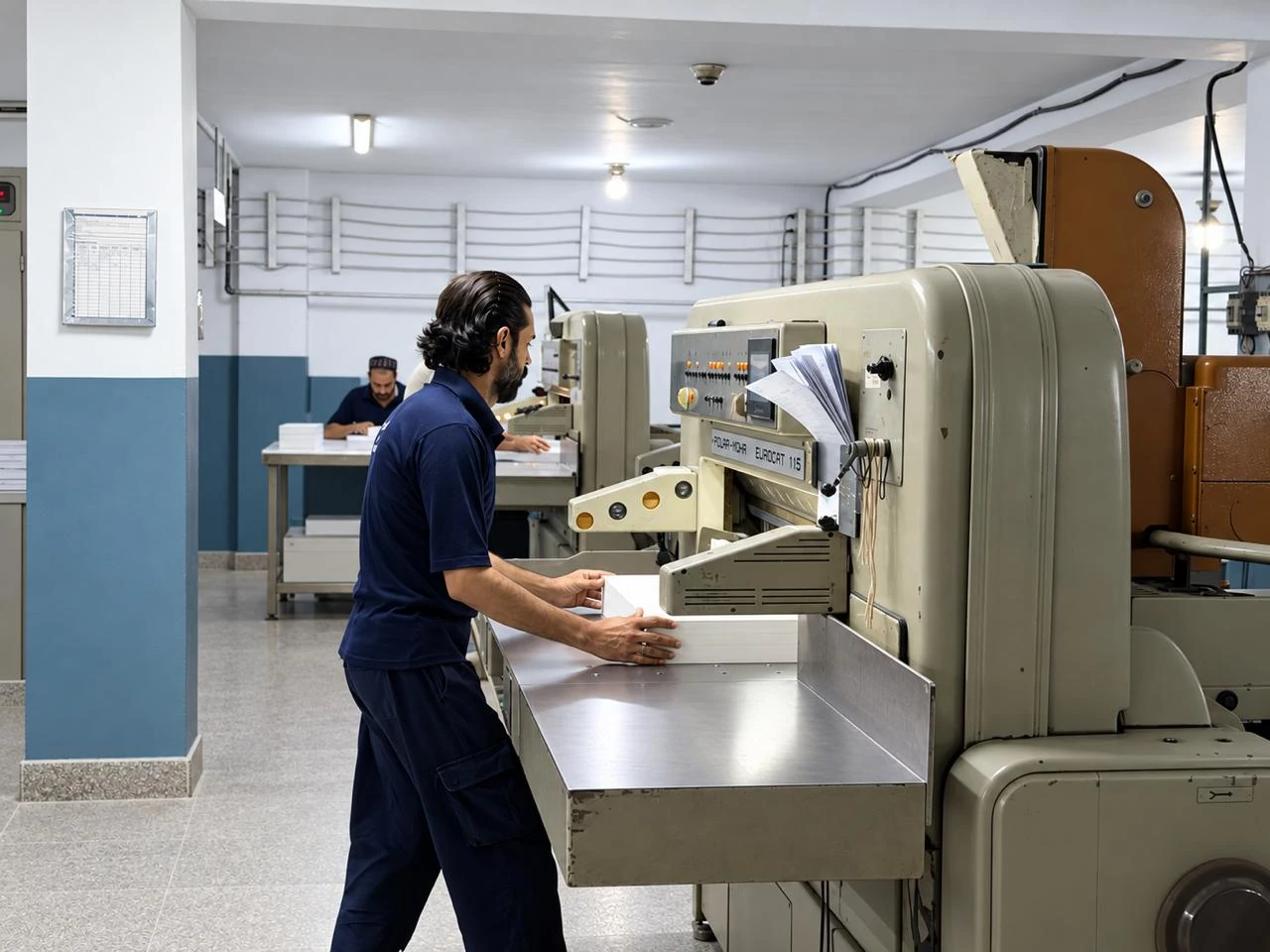
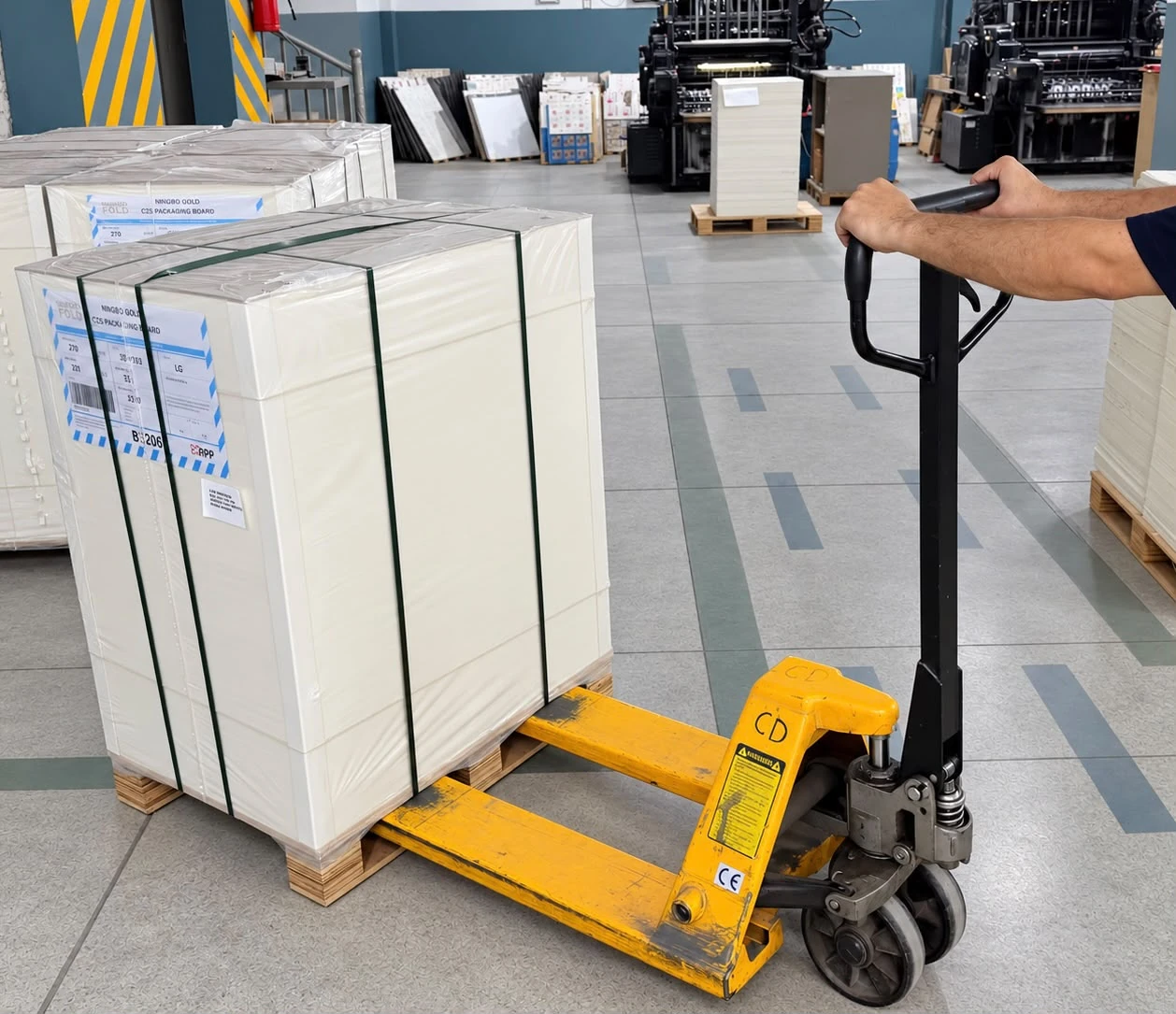
Paperboard is kept in wrapped stacks, then moved to the cutting area on a pallet lifter. The operator aligns the stack at the guillotine and cuts it to the sheet size the job needs. Plates and paperboard are now ready for Press.

Operator aligning paperboard at a guillotine cutter.
Cutting to sheet size
A pallet lifter carrying paperboard to production.
Moving the material

Our process

Press

On our Heidelberg presses the plate meets the board. Five colours and a coating go down in one pass; ink, colour and registration are set, then measured sheet after sheet against the approved proof.

On the floor

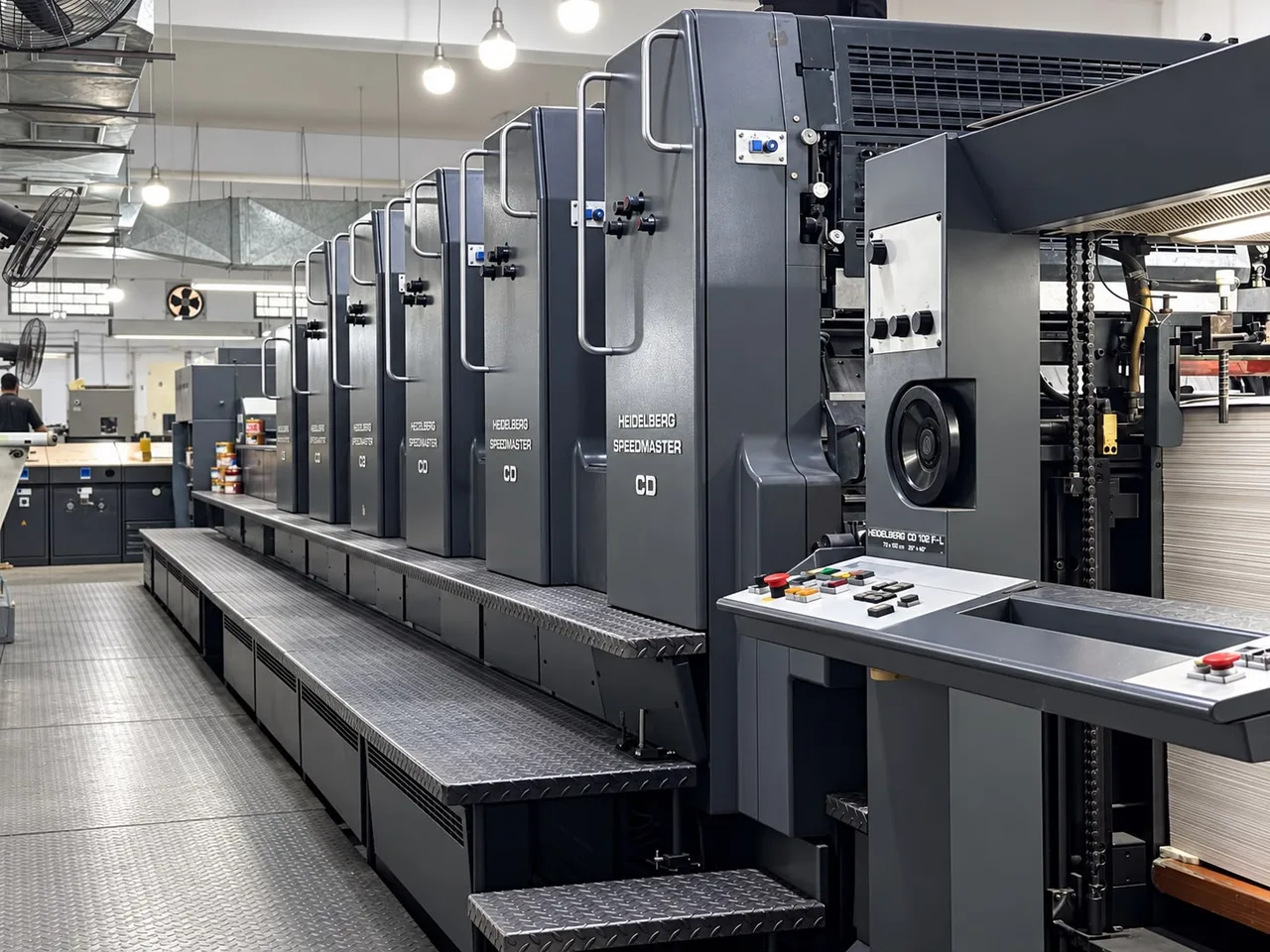
  • Heidelberg Speedmaster CD 102: five colours plus an inline coater, printing and coating in one pass at up to 15,000 sheets an hour, with sheet-to-sheet registration that holds across the whole run.
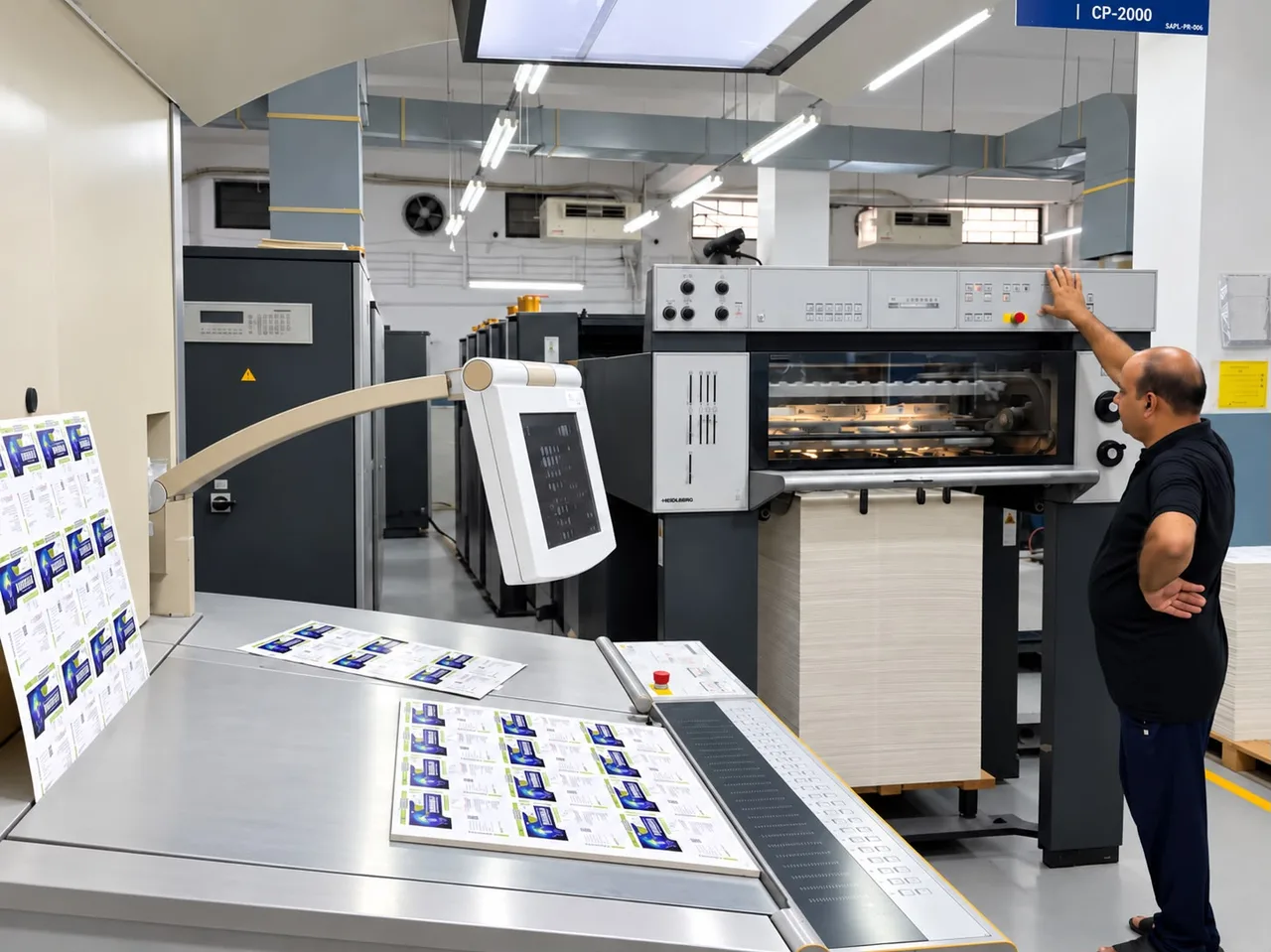
  • Heidelberg Speedmaster SM 74 with CP2000 control: five colours plus coater, up to 15,000 sheets an hour, with touchscreen inking control for precise, repeatable colour.
  • Every colour on the sheet, process or spot, is matched to the brand’s specified colours, with a choice of ink systems.
  • Colour is measured with a spectrophotometer against the approved proof on every run, not judged by eye.

Materials we print on

  • Paper
  • Duplex board
  • Bleach board (SBS)
  • Film-laminated board

On the press

  • Five colours plus a coater in one pass
  • Precise matching to specified brand colours
  • Choice of ink systems and colour management
  • Specialist skills with a vigilant eye across the whole run

Preparing the press.

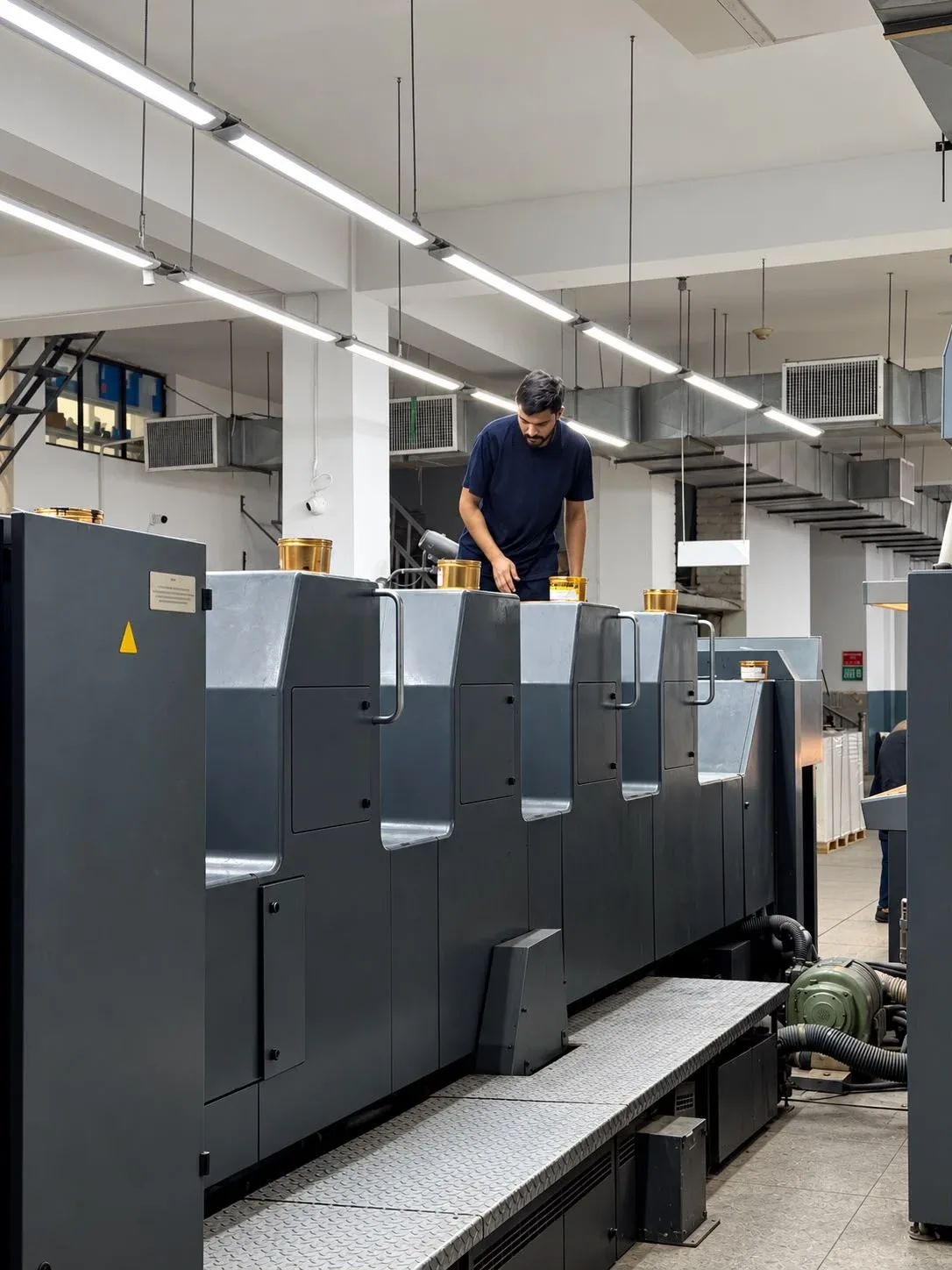
Before the run, each printing unit is charged with the process and spot colours the job needs. The sheet then travels through the units in sequence, taking on one ink after another.

Press operator loading ink tins on top of the printing units.
Charging the ink units
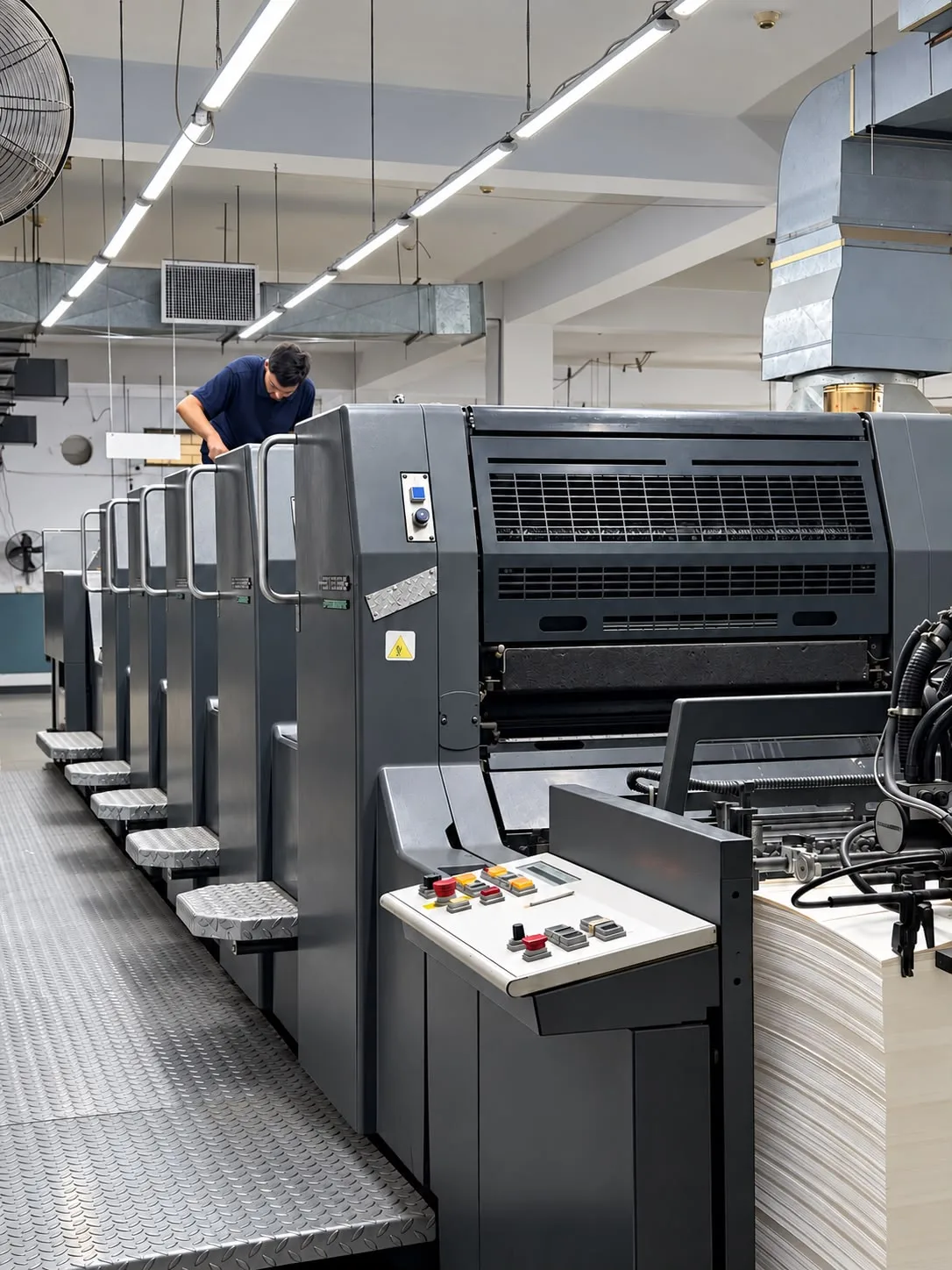
Multi-colour offset press line with a stack of paperboard at the feeder.
A multi-colour press line

The run begins.

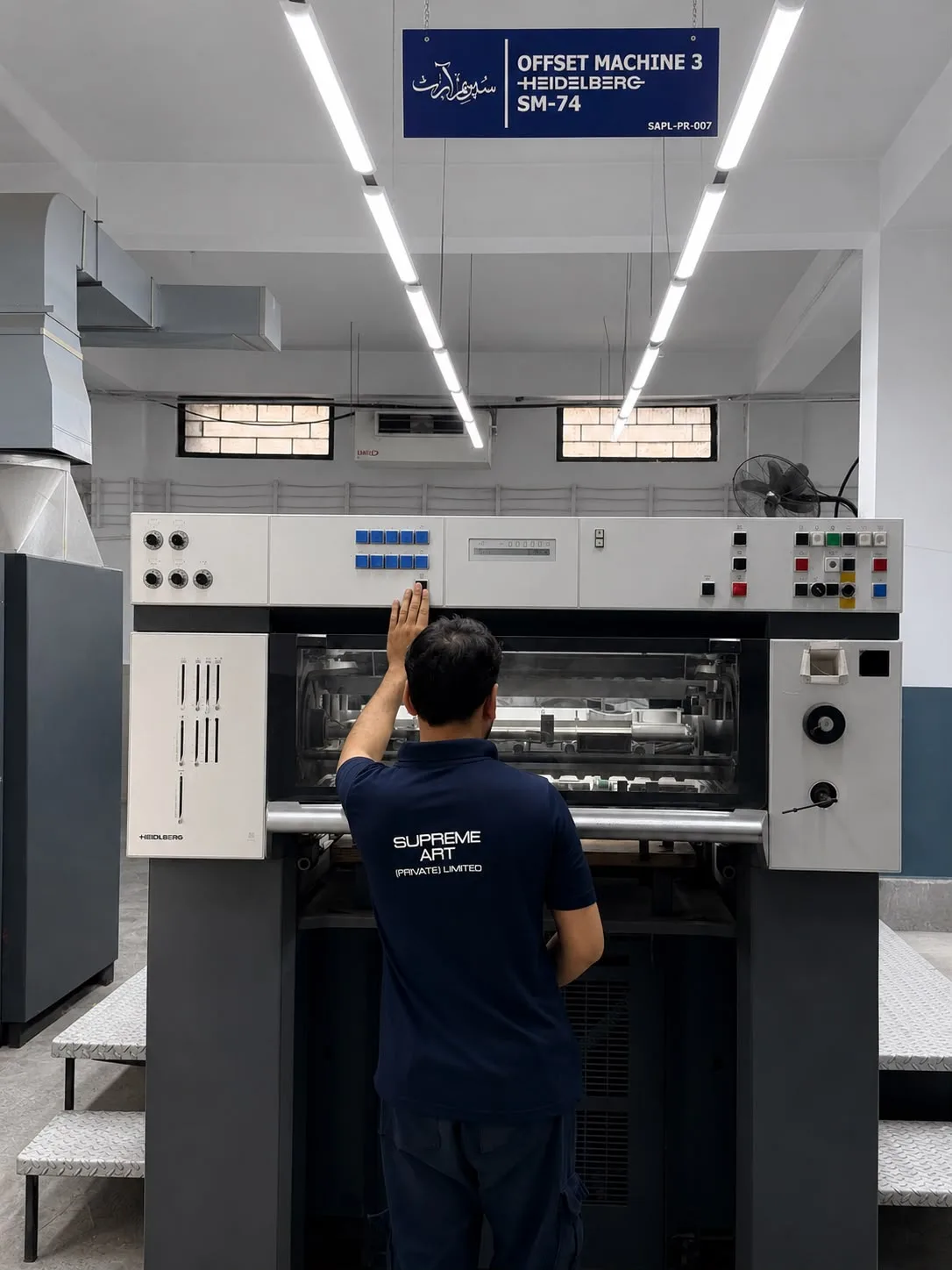
With the cut sheets loaded at the feeder, the run starts. Our Heidelberg Speedmaster CD 102 and SM-74 presses print multi-colour work with consistent registration from sheet to sheet.

Operator starting the press beside printed sheets on the delivery table.
Starting the run
Heidelberg Speedmaster CD 102 multi-colour printing press.
Heidelberg Speedmaster CD 102
Operator at the controls of Offset Machine 3, a Heidelberg SM-74.
Offset Machine 3, Heidelberg SM-74

Colour is measured, not guessed.

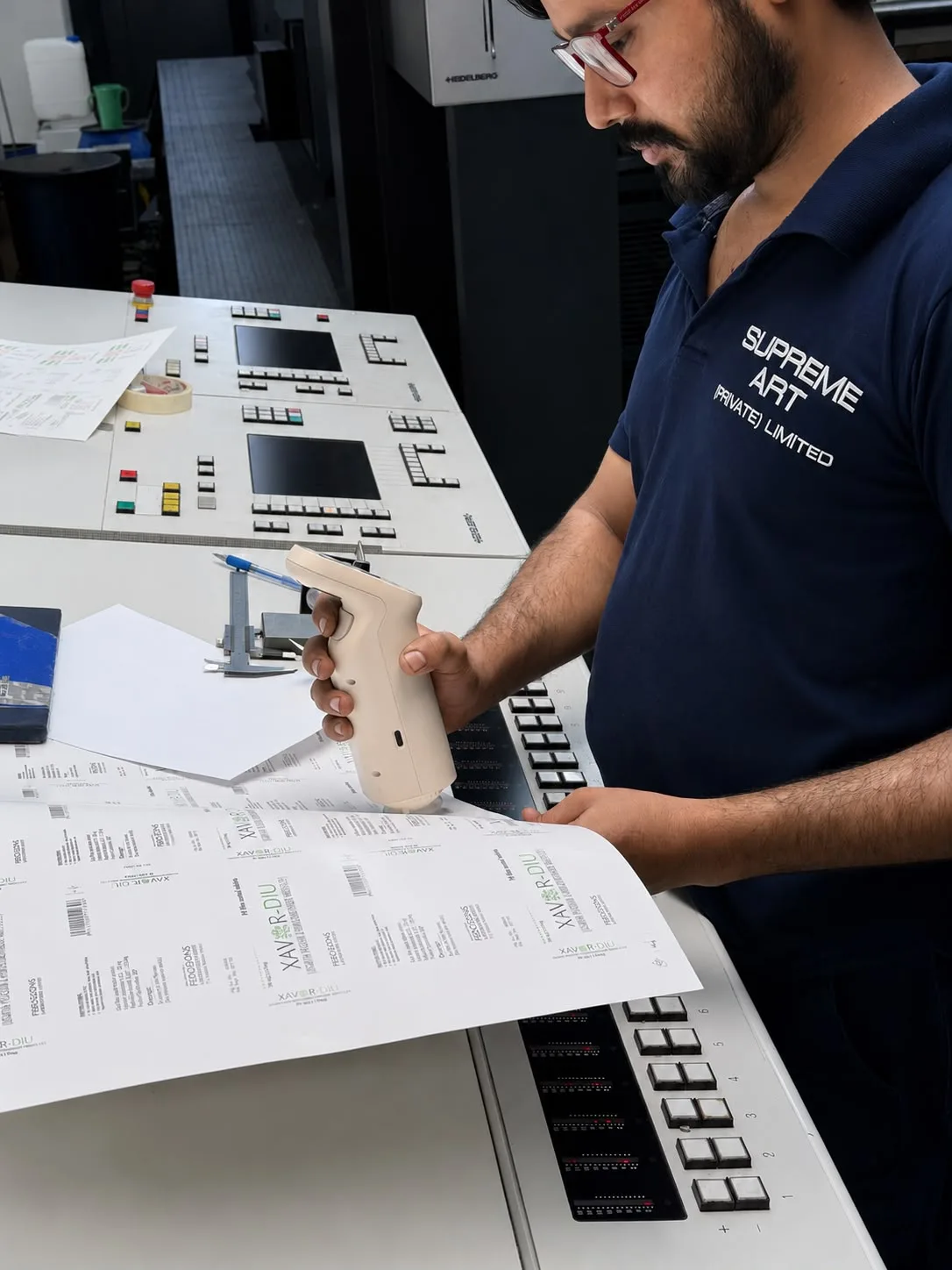
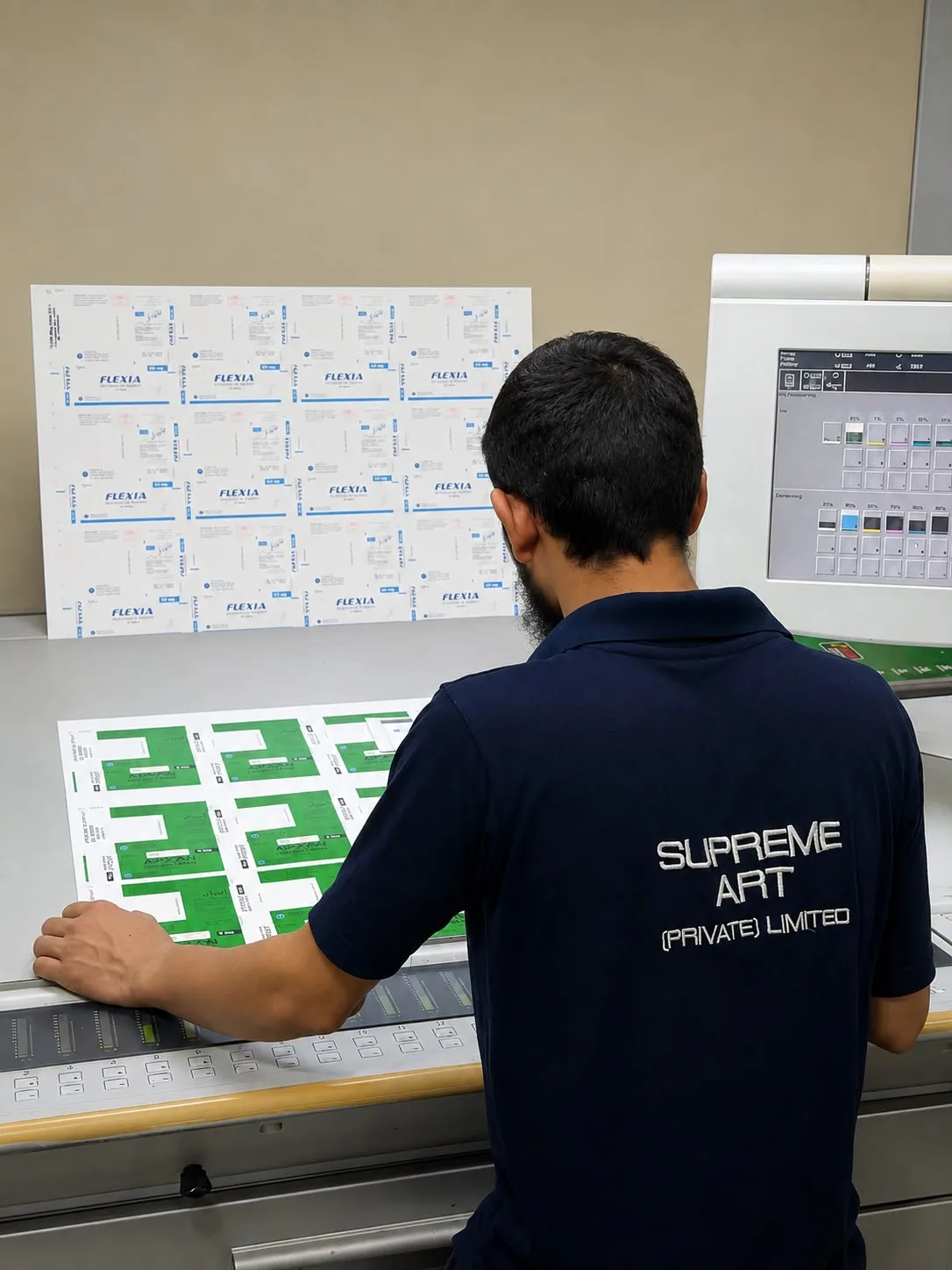
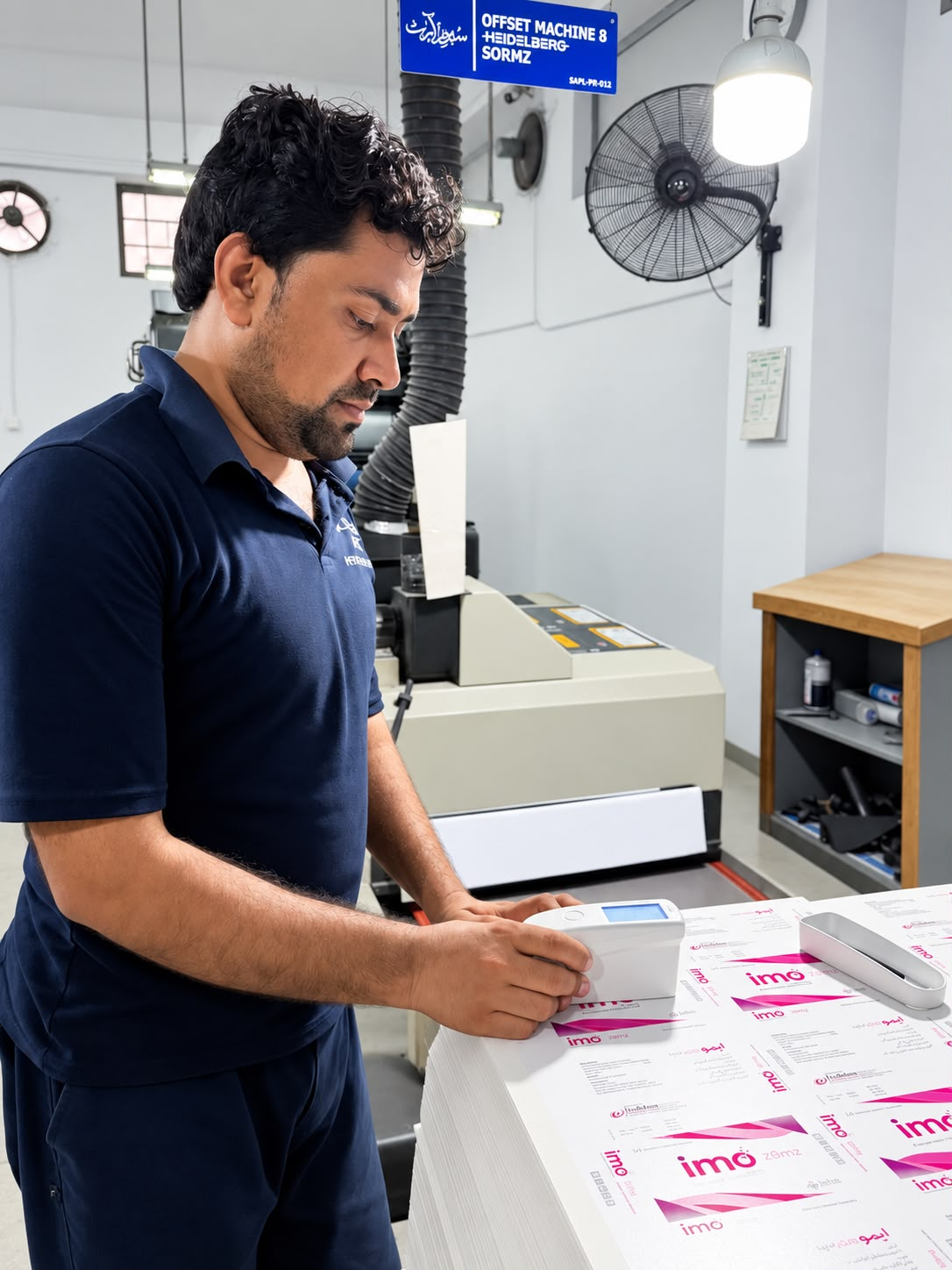
A handheld spectrophotometer reads the printed sheet against the approved colour targets. At the console, the sheet is compared with the approved proof and the ink zones are adjusted until every carton matches.

Operator measuring a printed sheet with a handheld spectrophotometer.
Measuring colour
Operator comparing a printed sheet with the approved proof at the press console.
Matching the approved proof

Our process

Post press

Printed sheets become cartons: coated, foiled where the design asks for it, cut, separated, inspected, folded, glued and packed for the client’s filling line.

On the floor

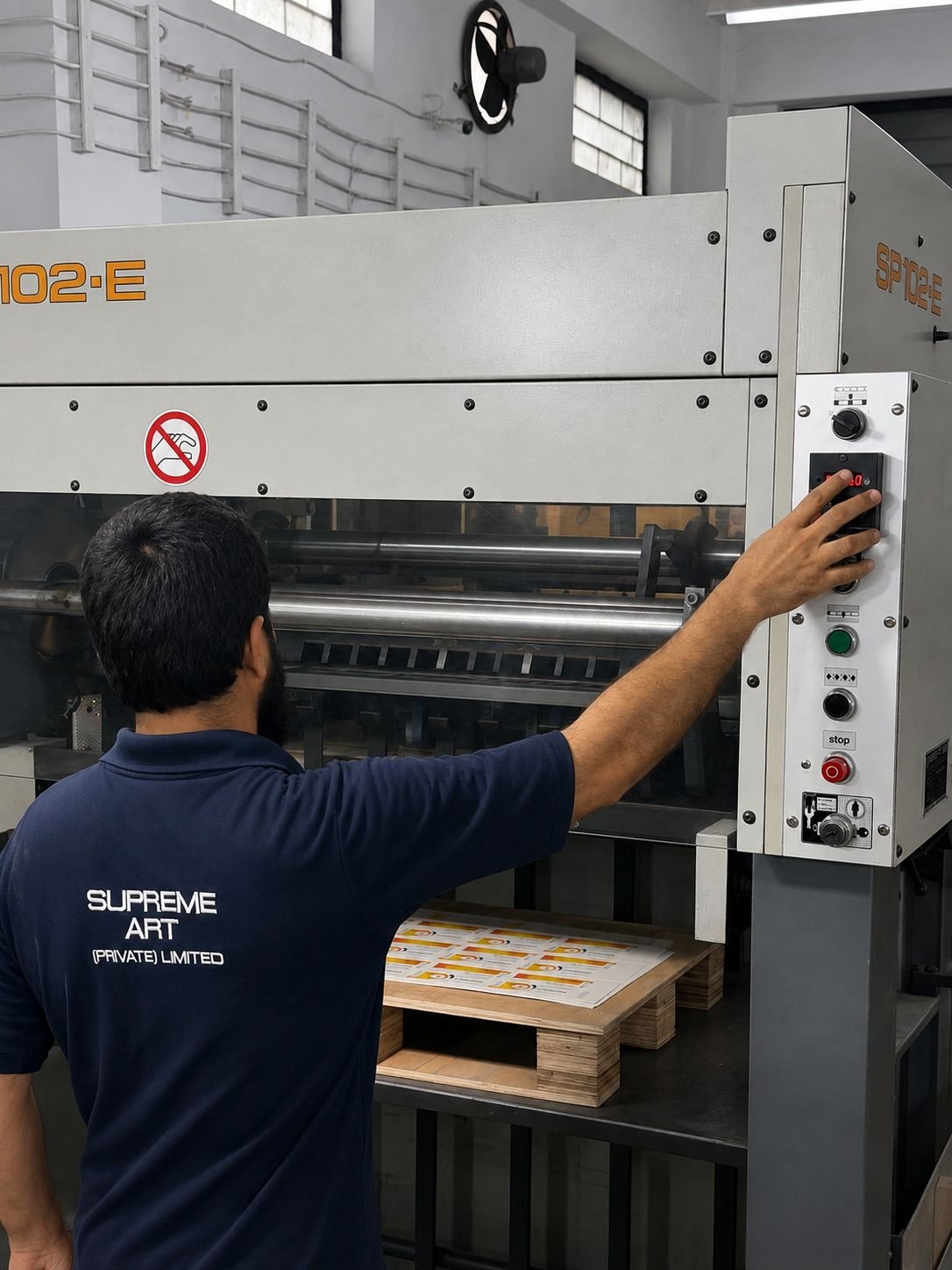
  • Bobst SP 102-E automatic die-cutter: up to 7,500 sheets an hour, cutting and creasing in one precise pass so each carton folds exactly on its lines.
  • A cylinder automatic die-cutter and a manual die-cutter take short and special runs; a hot-stamping machine applies foils.
  • UV, spot-UV, drip-off, food-grade and custom coatings, foils and colour-shifting security seals, all applied in-house.
  • A Swiss-built Bobst folder-gluer folds and glues tuck, lock-bottom and four- and six-corner cartons, counted and packed for delivery.

Finishes

  • UV and spot-UV coating
  • Specialised and custom coatings
  • Food-grade coatings
  • Drip-off coatings
  • Hot stamping (foiling)
  • Thermal foiling
  • Colour-shifting security seals
  • Anti-counterfeit packaging features

Carton styles

  • Straight tuck
  • Reverse tuck
  • Lock bottom
  • Four-corner folding
  • Six-corner

A finish that protects and shines.

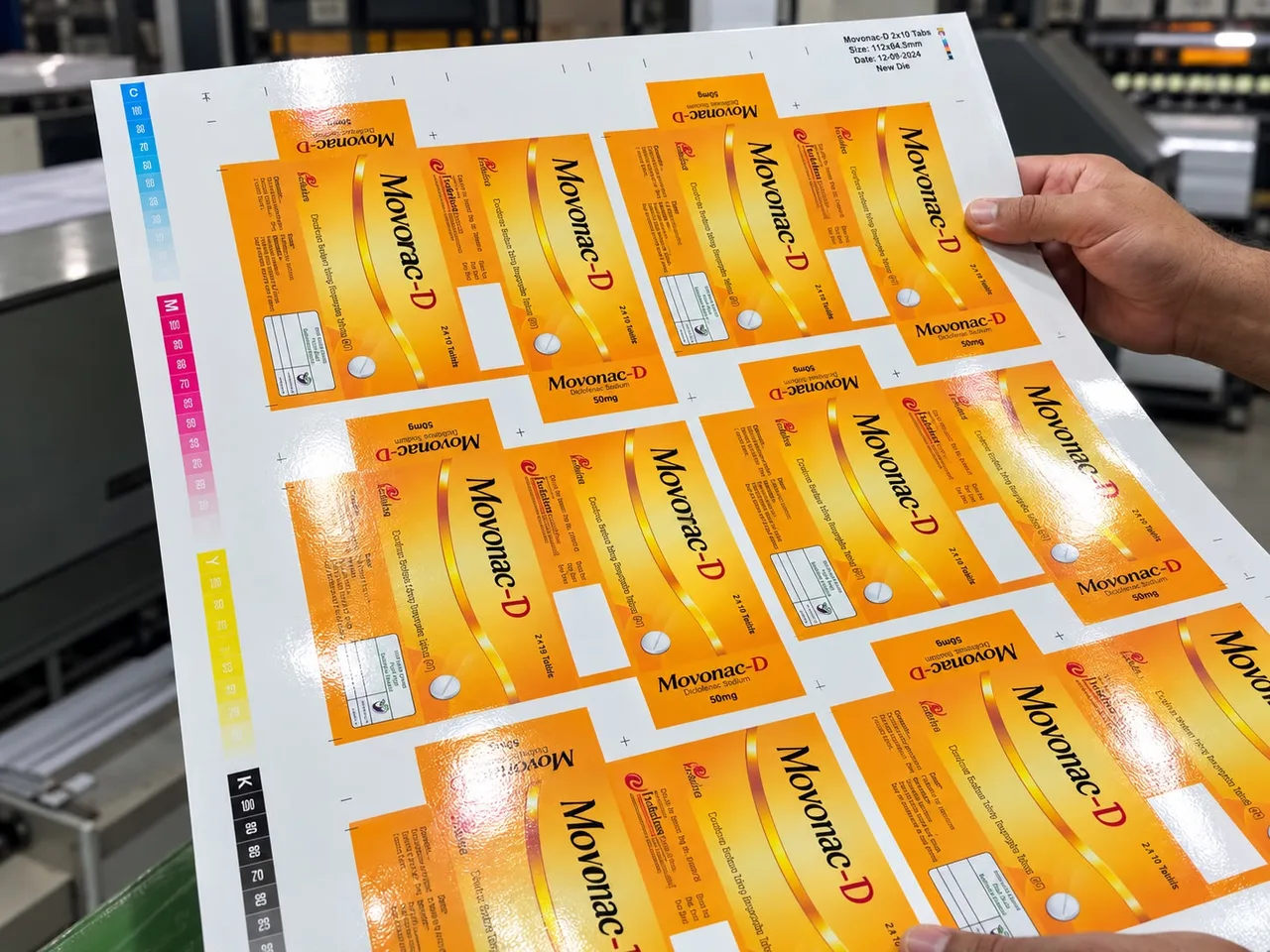
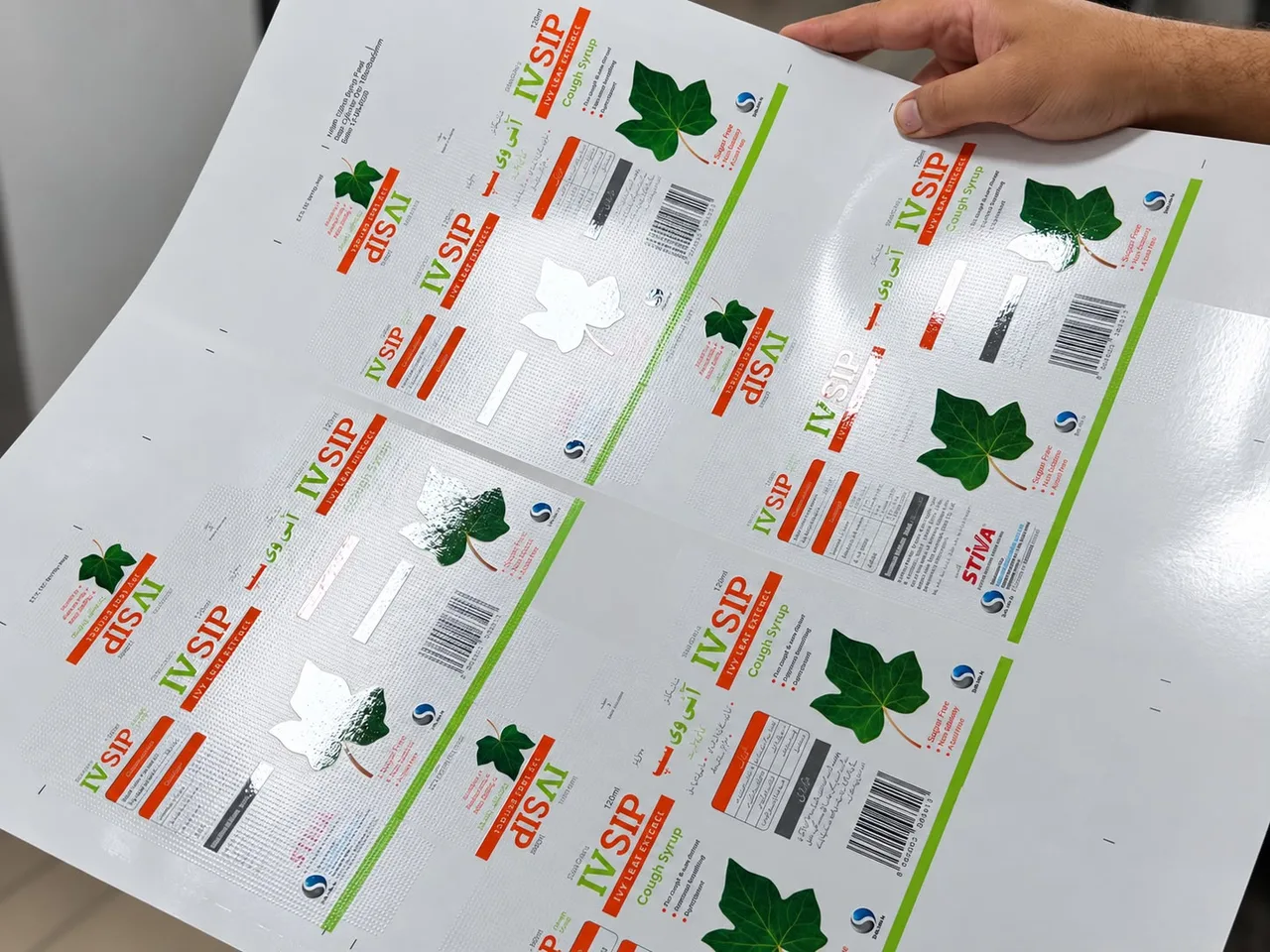
Printed sheets travel flat through the coating line, where a gloss finish deepens the colours and protects the artwork. Spot finishes add raised, textured detail to selected areas.

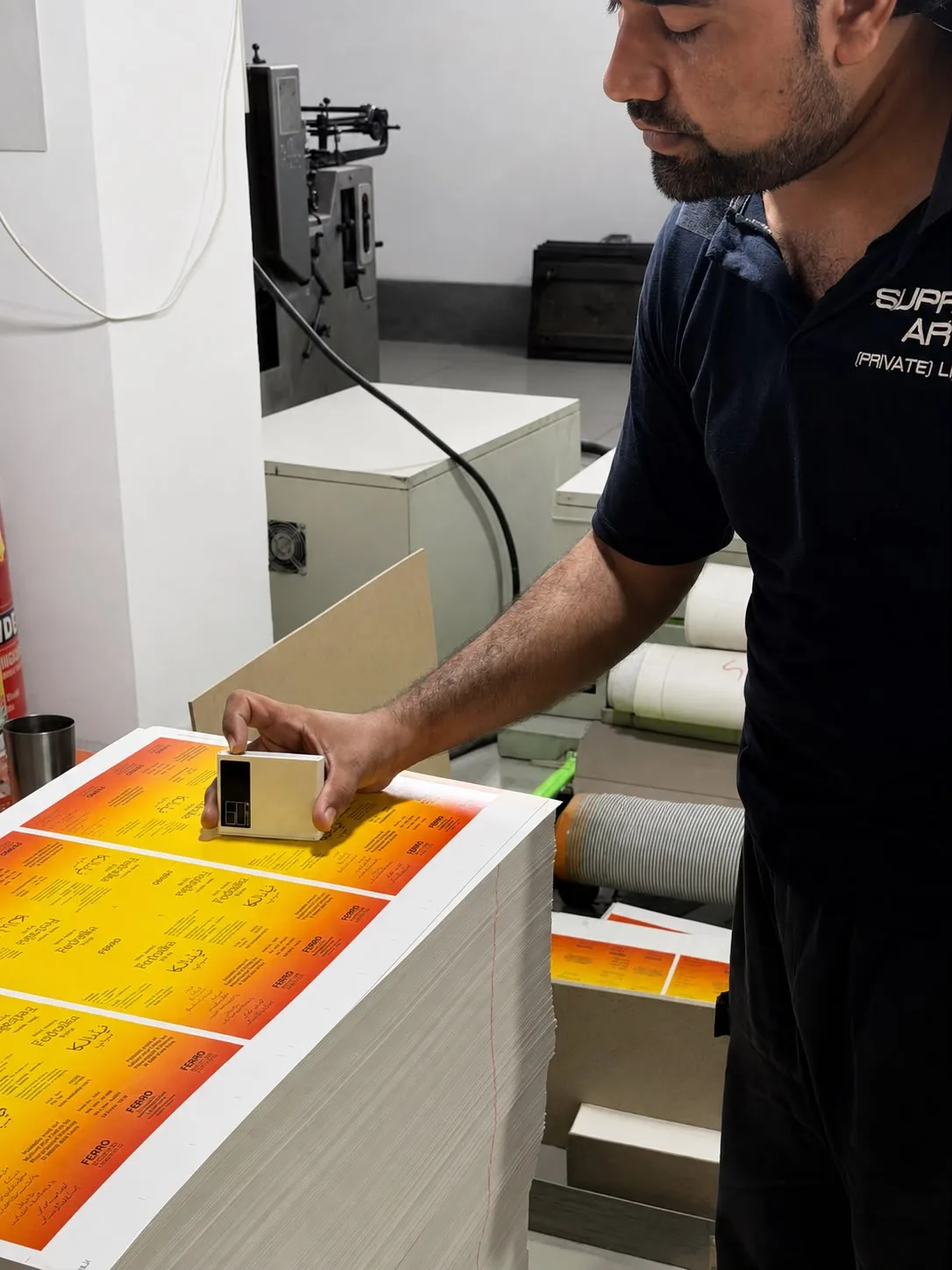
Gloss-coated sheet of orange Movonac-D cartons with its colour bar.
A gloss-coated sheet
IV SIP carton sheet with a raised, textured spot finish on selected areas.
Spot finish detail

Checked from the first sheet to the last.

Finished sheets are measured with handheld instruments and checked against the targets approved for the job before they move on to cutting.

Operator checking a coated sheet.
Checking the finish
Operator checking the top sheet of a finished stack.
Checking the stack

Cut and creased to shape.

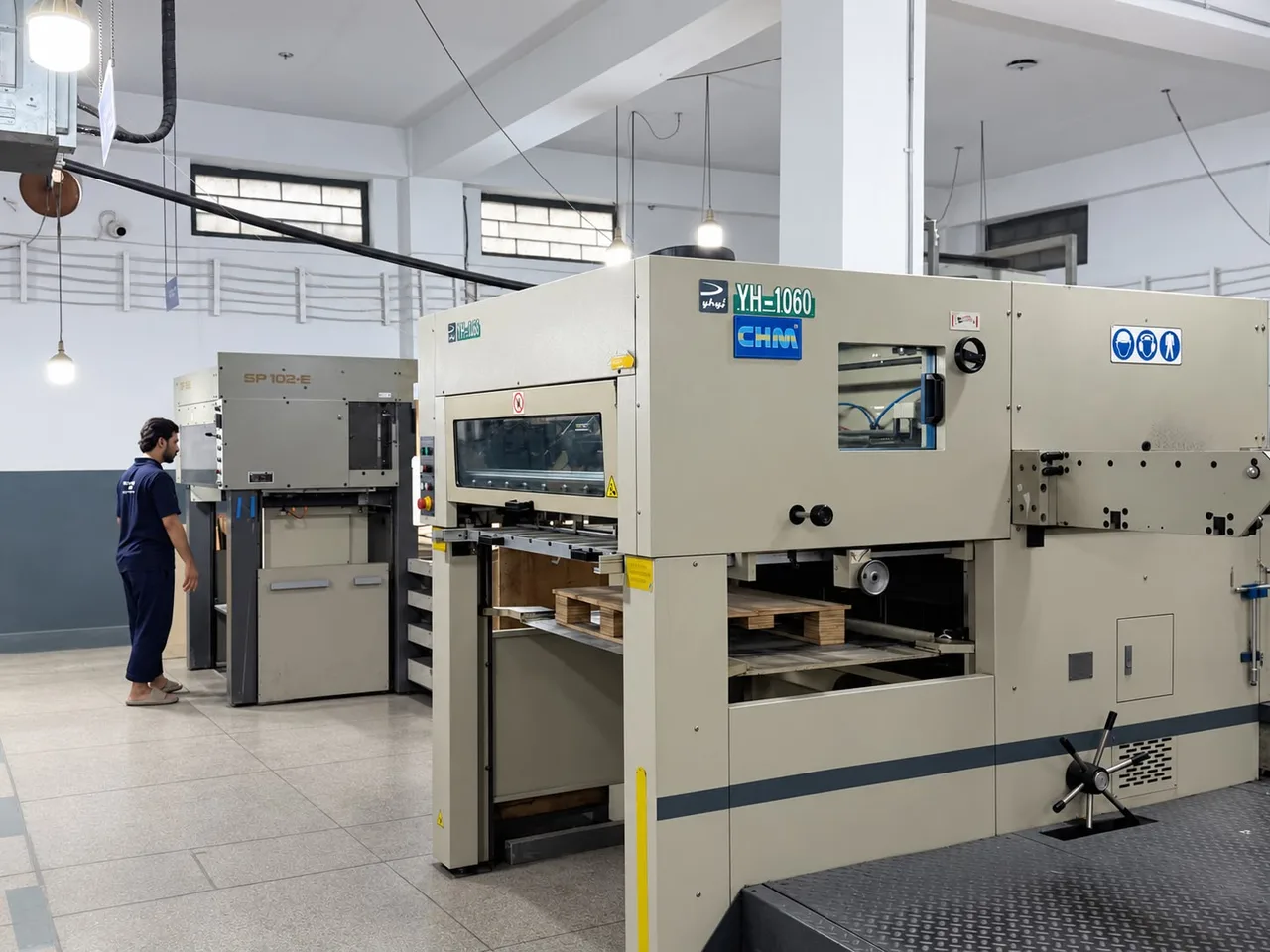
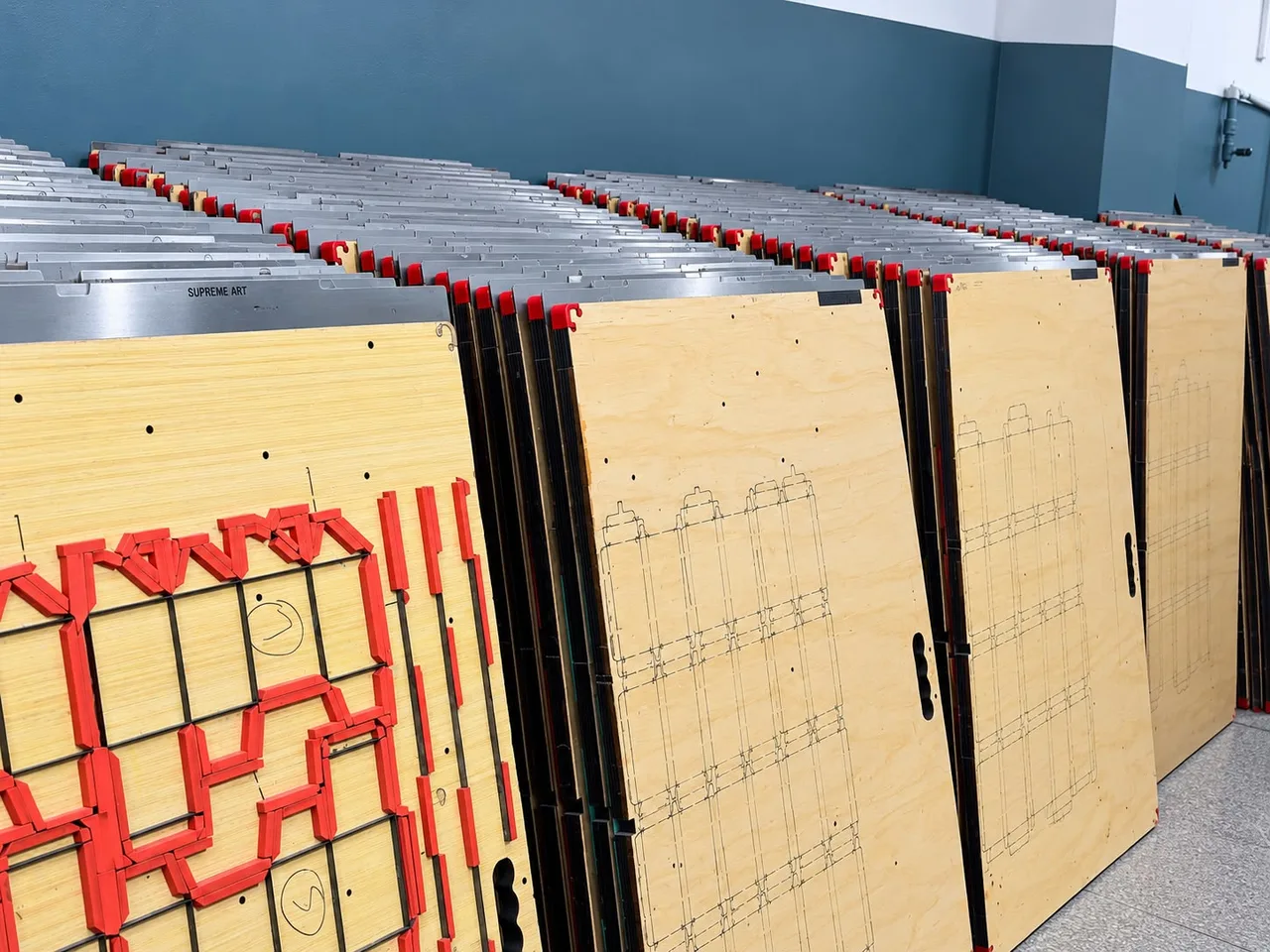
Every carton design has its own cutting die, kept in labelled racks. Our automatic die-cutters, including a YH-1060 and an SP 102-E, cut and crease full sheets at production speed.

Automatic die-cutters, a YH-1060 and an SP 102-E, on the factory floor.
Automatic die-cutters
Rows of Supreme Art cutting dies stored upright in racks.
Cutting dies in storage
Operator at the controls of the SP 102-E die-cutter.
Setting up the die-cutter

Separated and checked.

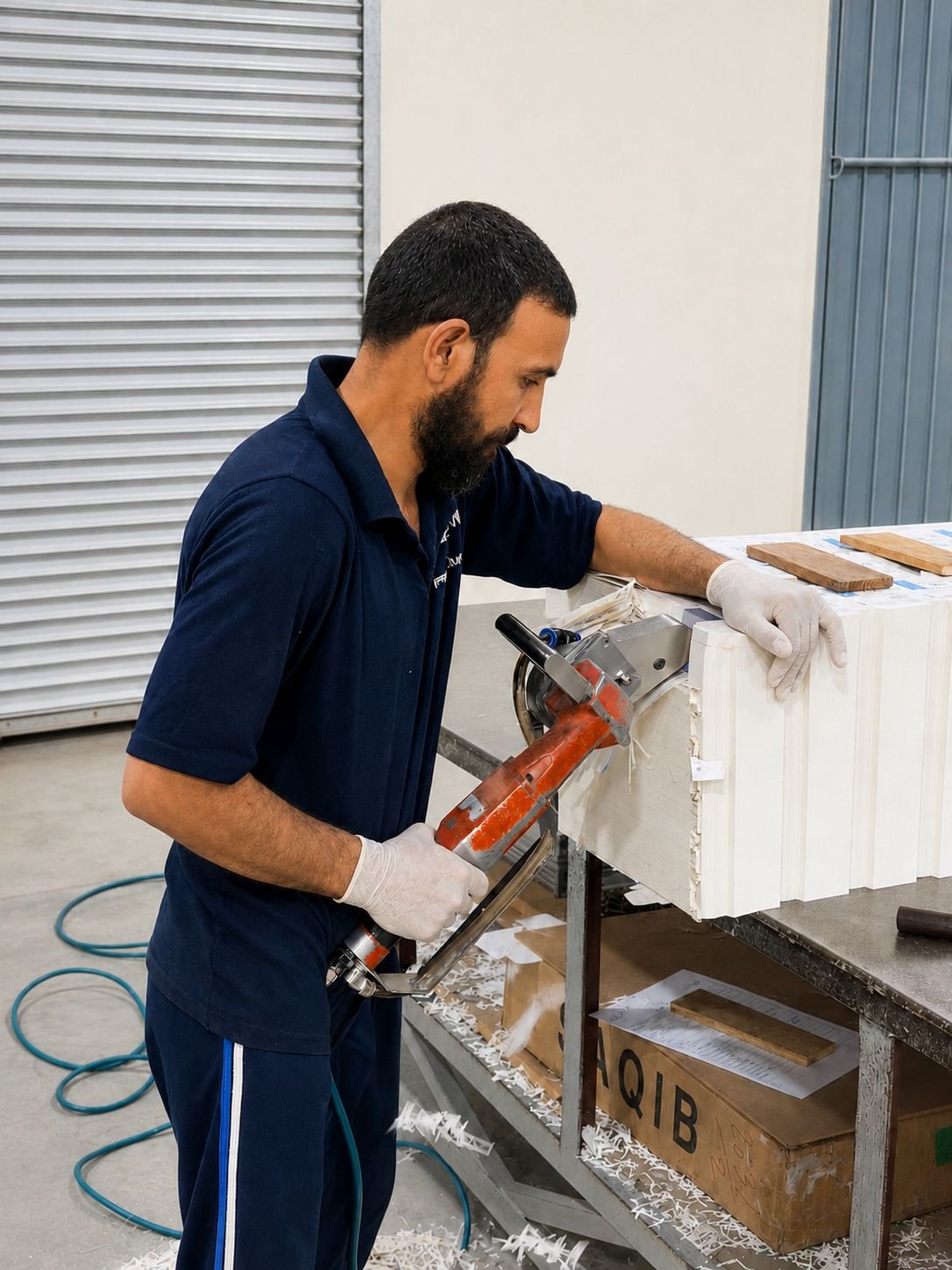
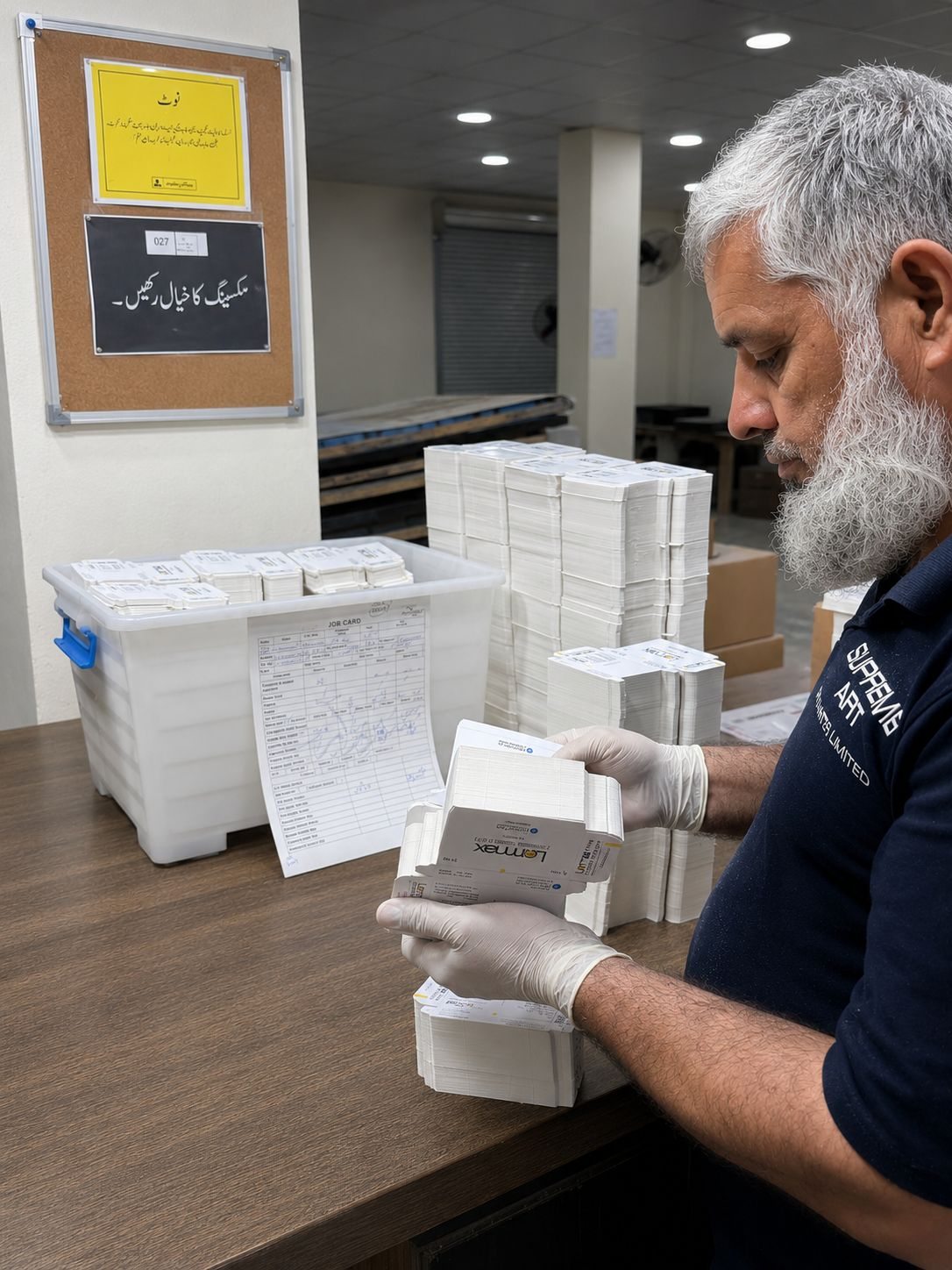
Waste board is removed from around the cut cartons, separating each blank cleanly, and every unit carton is inspected before it moves on to folding.

Operator removing waste board from a stack of die-cut sheets.
Removing waste board
Operator inspecting unit cartons by hand.
Inspecting unit cartons

Folded and glued.

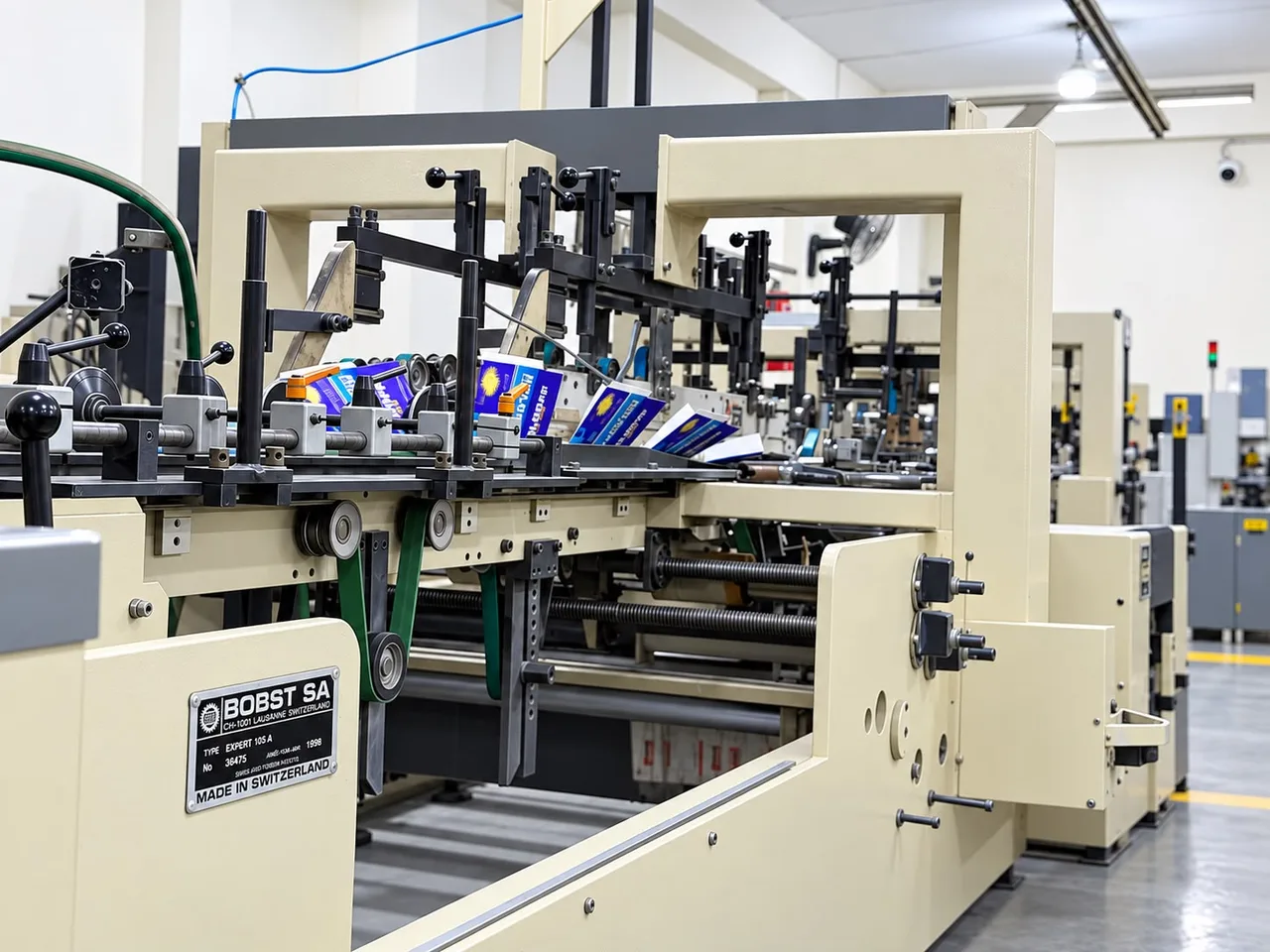
On our folder-gluers, including a Bobst Expert 105 A, the carton blanks are folded, glued and joined in one continuous run.

Bobst Expert 105 A folder-gluer running printed cartons.
Bobst Expert 105 A
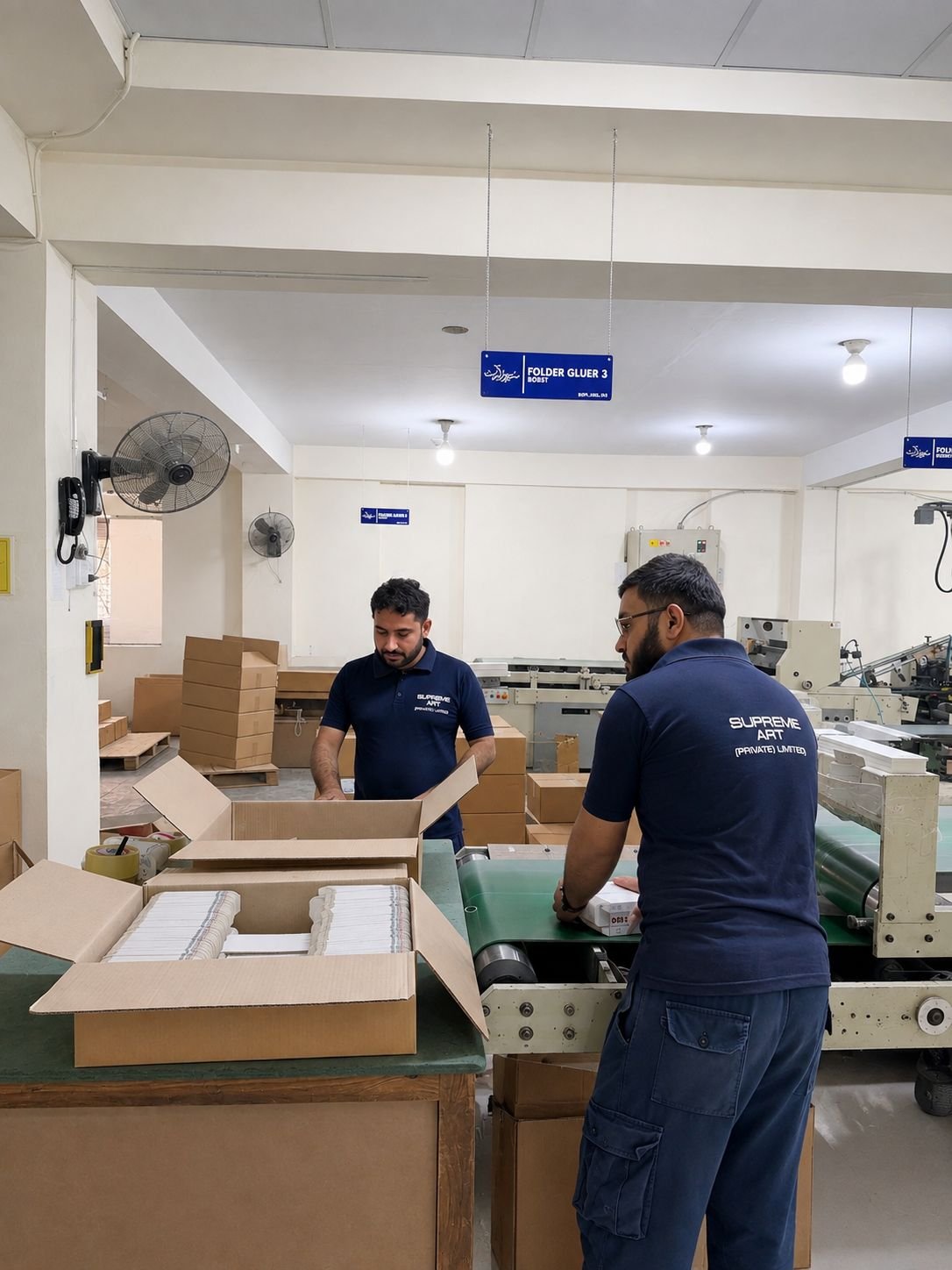
Operators running cartons through a folder-gluer.
Folder gluing

Packed and on its way.

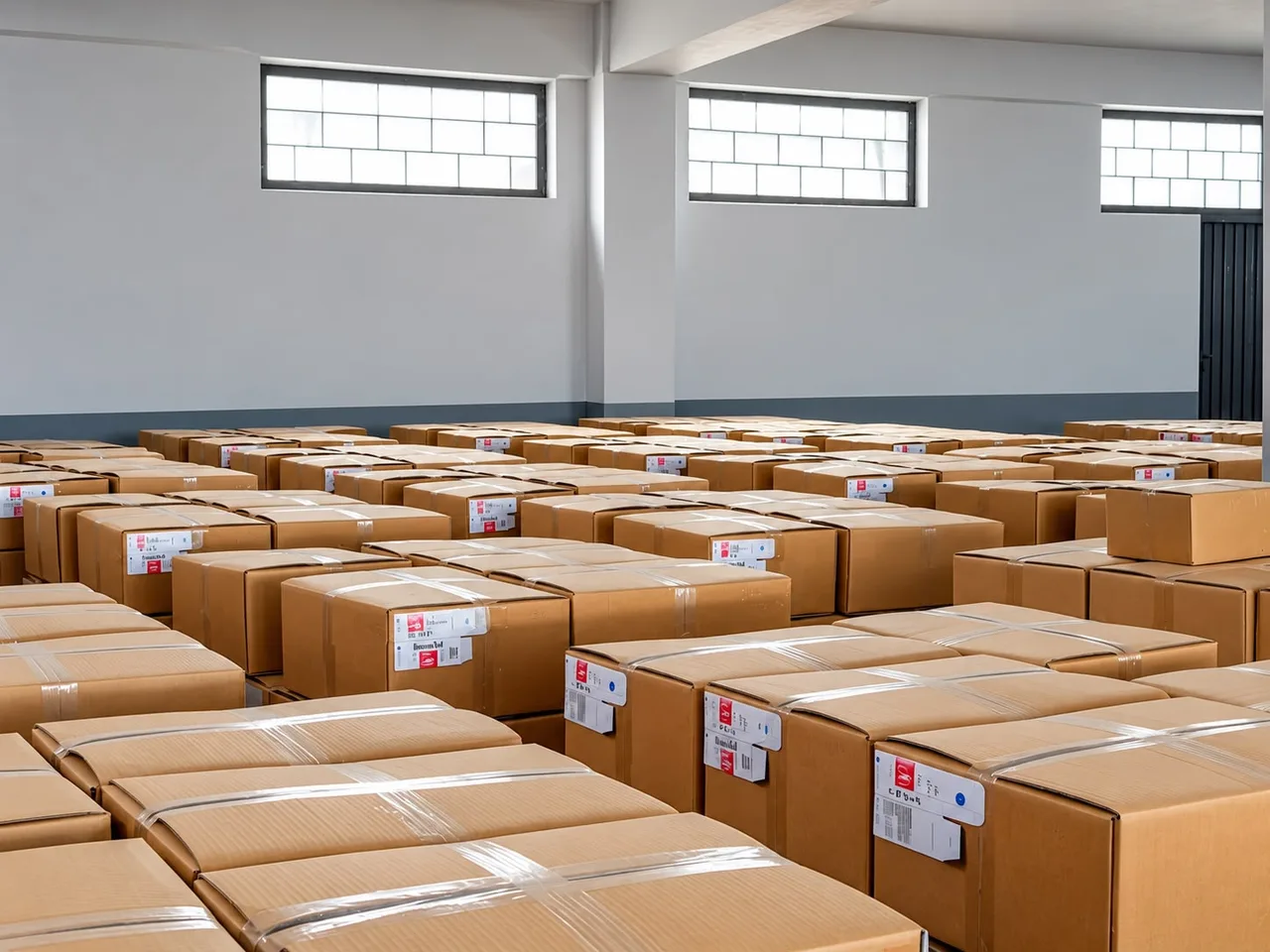
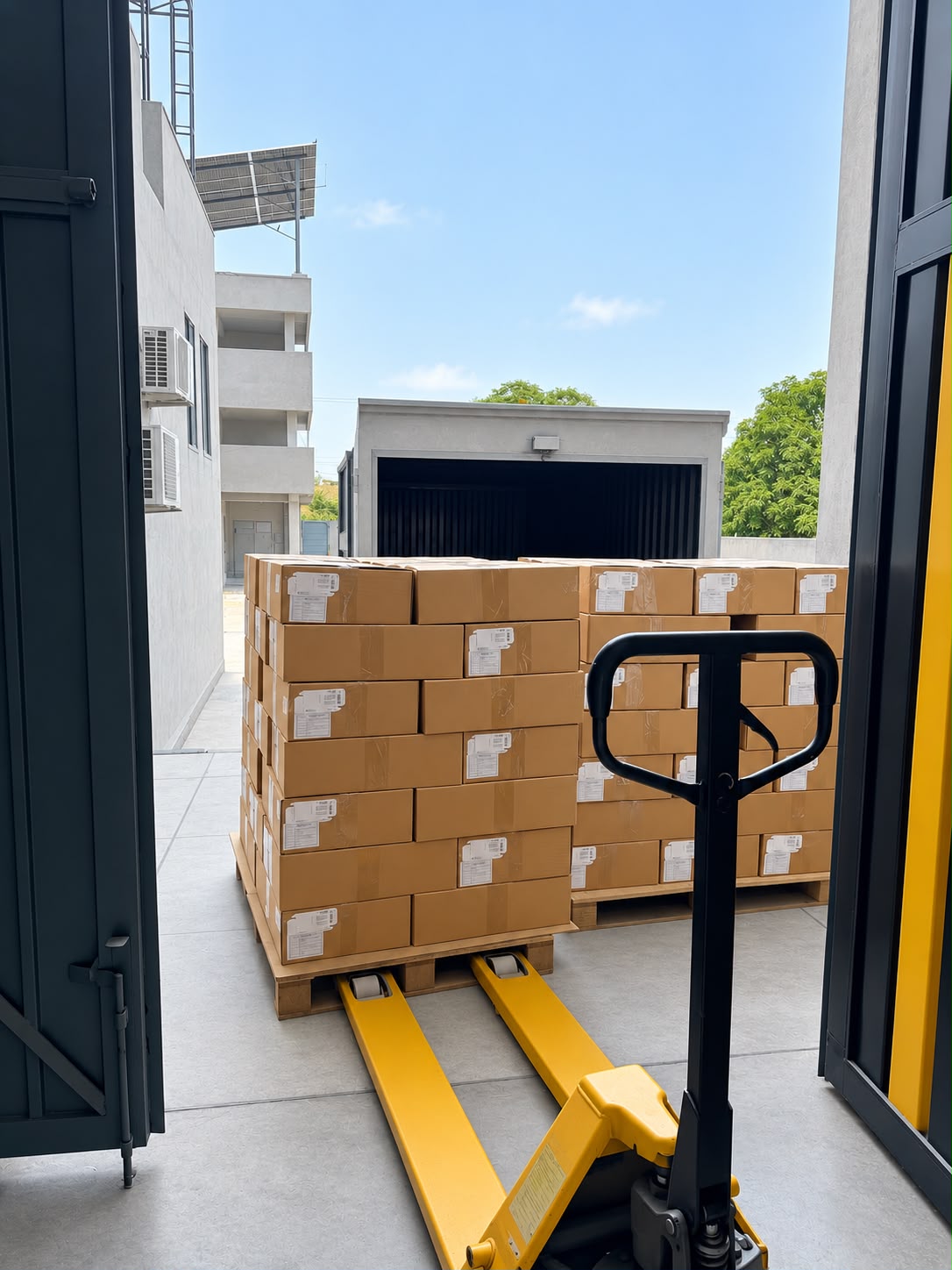
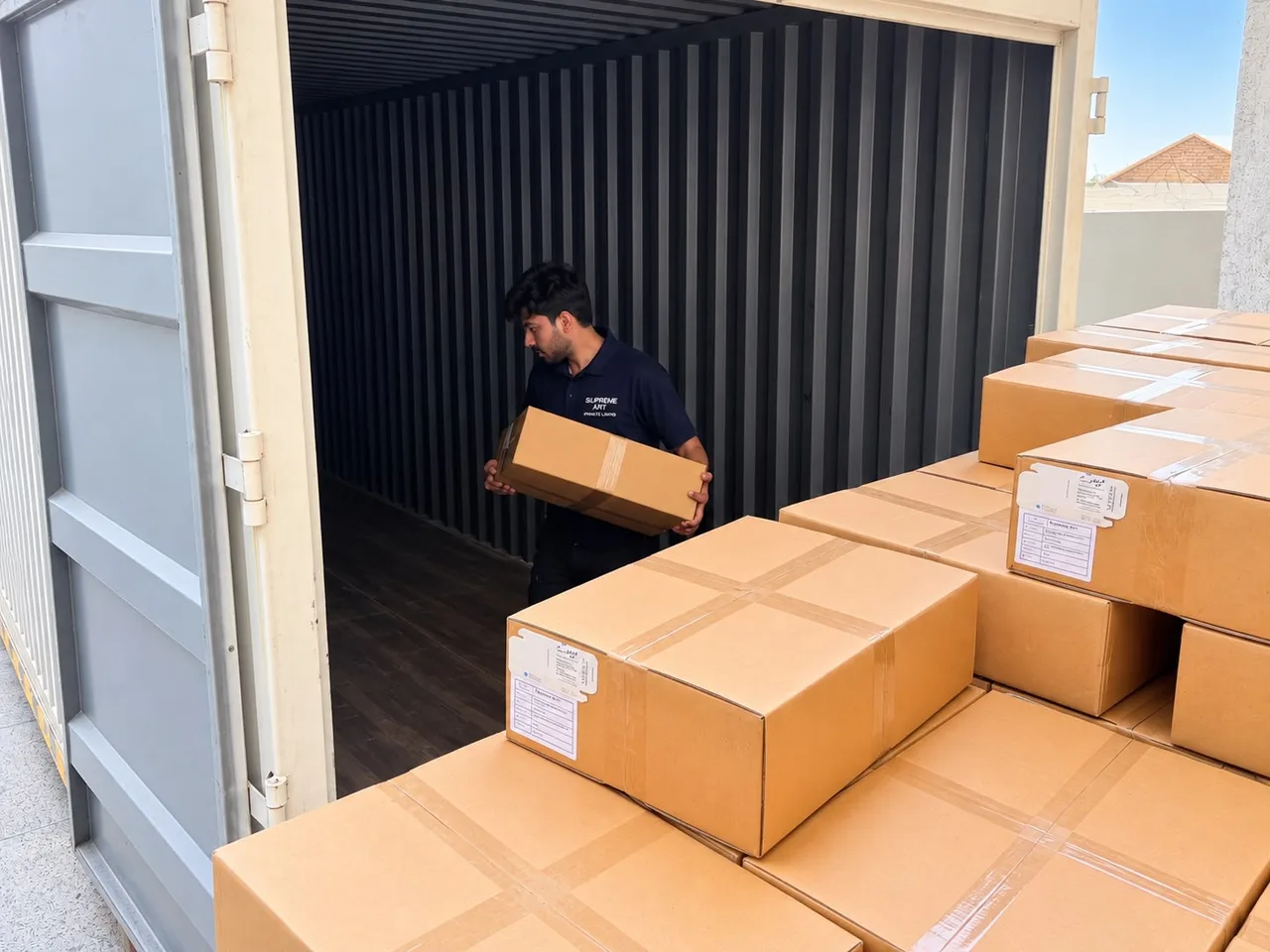
Finished cartons are packed into labelled shipping boxes, held in store and loaded for delivery to the client, ready for the filling line.

Rows of labelled, sealed shipping boxes in the finished-goods store.
Ready for dispatch
Packed cartons stacked on a pallet at the loading bay.
Palletised for delivery
Worker loading labelled boxes into a shipping container.
Loading for delivery

Have a carton to make?

Send us your artwork or dieline — we'll come back with a quote and a timeline.